Farm & Family Business Succession: A Personal Reflection

Succession in a family business isn’t a transaction. It’s a test of leadership, patience, and values.

For our family, it was a journey that took more than a decade—from the first conversations with Mum in 2012 to final settlement in May 2025, just months after she passed.

Article content
Mum with one of her Angus Bulls.

It began with a shared intent: keep the family farm in the family. But living that intent took time, courage, and compromise.

My brother had returned home post-earthquake and was working alongside Mum. I knew I didn’t want to farm it full time—but I did want a clear plan that honoured our family’s legacy and I did want to retain a connection with the land.

We engaged advisors. Ran workshops. Explored different options. At times, the conversations broke down. Progress was slow. Emotions & frustrations at times ran high.

Eventually, we explored a buyout option, and after 8 months of negotiation, we agreed: he would retain the farm, stock, and plant; I would retain a small bush block; and we would settle with a cash component.

Then, just weeks later, and before we could action a formal contractual agreement, Mum passed away quite suddenly.
Article content
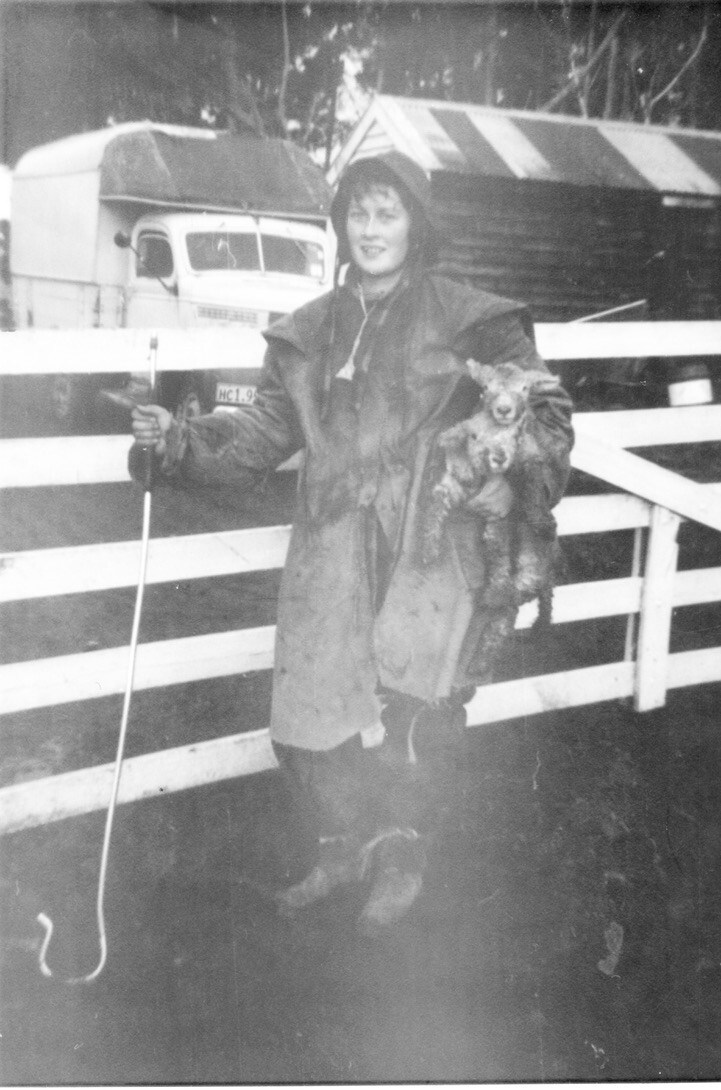
Mum: A registered nurse before 40 years farming – always a farmer at heart.

It was a powerful reminder that succession planning must account for the unexpected. Without a plan, we would have faced increased financial risk, a lengthy process, and family strain—right in the middle of personal grief. We had to navigate a funeral and the probate process which added complexity.

Thankfully, we had a foundation plan in place. Not perfect. But one that we could implement with minor amendments.

What I’ve personally learned:

  • Create a clear pathway. One that gradually leads to an agreed and aligned plan—don’t leave it to chance.
  • Start early. Succession is a process, not an event. It takes far longer than you might think.
  • Expect the unexpected. Illness, death, or external pressure can shift everything and quite suddenly.
  • Know the role. For several years prior to her death I had the financial power of attorney for Mum and the responsibility and governance that brings. It added unexpected complexity and conflicts that were hard to balance. The requirement to do the right thing on Mums behalf (business and care) whilst balancing the interests of my brother & my self as we explored the options for farm transition.
  • Fair ≠ equal. Seek outcomes that are pragmatic, fair and respected, not just based on accounting numbers. It comes back to being clear what each party wants and managing expectations.
  • Anchor to shared intent. Our north star was Mum’s wish to keep the farm in the family. We were able to return to this when it got hard and it brought us back on track.
  • Use trusted external advisers. They really help you to work through the conflicts that arise. They bring logic, neutrality, experience and structure to difficult conversations. Pay for the best advice and use it.
  • Learn from others who’ve done it well. Hearing the experience of others shortens the journey and protects relationships. Every situation is very different but there are many common issues – consider this lived experience and adapt it and apply it.
  • Stay connected as a family. Through birthdays, shared meals, and simple check-ins—relationships need their own care. So many families lose their way and relationships never recover.
  • Stay invested. I chose to leave funds in the farm to support my brother and his family’s success. That decision honoured our mother’s intent and legacy—and my own values. I will always love the farm, the land and my family and as such will always be supportive and want it to remain a family jewel.

Succession is the ultimate long game. It’s not about control—it’s about stewardship. Not about what’s fair today—but what’s sustainable and sets up future generations.

If you’re on this path: take your time, talk openly, and build a plan before you need one.

You will need courage and guidance to navigate many options and decisions.

I say trust the process. Inaction is not an option because we all have to face it.

Because when succession is done well, it strengthens more than a business. It strengthens a family. If done poorly it can destroy the bonds of any family and sadly, after a lifetime of success and achievement a lasting legacy will be about how you exit and the way the remaining family feels.
Article content

If you’re navigating succession in a family business, I’m always happy to connect, share, or listen. #SuccessionPlanning #FamilyBusiness #Leadership #Governance #Legacy #Agribusiness
2023: A Year in Leadership – Reflections and Learnings

Heraclitus, an ancient Greek philosopher, once said, “Out of every one hundred men, ten shouldn’t even be there, eighty are just targets, nine are the real fighters…Ah, but the one, one is a warrior.”

This last year I have been very fortunate to support so many of these “warriors”…..the professional leaders charged with the future success of their organisations.

The clarity of a full year of experiences often comes only with some distance. In the thick of the daily grind, time rushes by, filled with daily challenges and tasks. As my 19th year of self employment year ends, an extended break creates that valuable opportunity to pause and reflect.

At Pivot & Pace, we’ve had a dynamic year, providing comprehensive support to diverse & market leading companies. Our focus has remained on helping these organisations to define, adapt, and implement their strategies in the face of ongoing market fluctuations, change and disruption. We’ve seen our Executive and Operational Leader Programmes thrive, catering to the evolving needs of our clients. Our commitment to enhancing governance and succession planning has been ongoing.

In terms of expansion, we’ve broadened our horizons to Auckland and Queenstown, not just with a presence but also in strategic alliances. These partnerships, formed with academic, professional, and commercial entities, are guided by a crucial question: “How do we appear where our future clients are?” This philosophy has streamlined our approach to building trusted relationships and facilitating high value niche services alongside like minded partners.

The year wasn’t without its challenges, marked by highs and lows that are part and parcel of navigating a growing business in a competitive industry. Leadership, to me, is a never-ending journey of personal growth, a constant balance of self-awareness, decision-making, professional judgement and learning to thrive in ambiguity.

As a tradition, I like to reflect on my leadership roles – as Managing Partner, Board Chair, director, father, coach, and strategist – and to identify my key learnings. Here are my significant ones from 2023, in no particular order:

  1. Competition happens at the bottom. Those leading any industry are collaborating together. This year we have focussed on continuing to build on & formalise our strong strategic partnerships. When there is trust, alignment of shared values and mutual respect, this is a game changer in terms of making an impact to clients. Strategic partnerships take time, focused effort, resources and most critically they require the exchange of genuine value & goodwill between all parties involved.
  2. To have a diverse team you need to set them up to succeed. We all know the benefits of having diverse thinkers at the table (different cultures, ages, genders, experiences, education, industry expertise) but in order for them to make an impact and thrive some real consideration is needed to ensure the structures, behaviours and norms evolve to leverage this impact. Too often those who bring much needed different thinking don’t stay because they feel they don’t fit and can’t make an impact. If nothing changes, nothing changes.
  3. Giving time to help others has been some of my most fulfilling work in 2023. Each year I give back to others through some unpaid work. I have coached startup entrepreneurs, emerging directors, post graduate students and others who have who have simply needed a bit of support just to help them through a tough spot. I have personally learnt a lot from these people and they have helped me to explore different thinking and to be more empathetic. The giving works both ways!
  4. “The magic you are looking for is in the work you are avoiding”. Often we gravitate to the work we know, love and get energy from by default. But innovative thinking and the exploration & development of new ideas gets parked simply because of the energy needed and the time to prioritise it. This year I have been encouraged by several mentors to take reflection, listening, curiosity and questioning to another level. This has allowed better insights and has helped me to prioritise what I should be doing for future success.
  5. Real talent is exceptionally hard to find. Our business thrives on talented individuals who are all rounders – they can navigate complex client relationships and deliver strategic insights with impact. Identifying and nurturing such talent remains a key focus & challenge as we move into 2024.
  6. The “sandwich” generation is tricky. 2023 was such a full one year professionally and also personally. Juggling professional demands with personal responsibilities in a year filled with significant family milestones, young children and elderly parents challenges, has been a leadership learning curve in itself.
Our Purpose: “To make an Intentional Impact”

My own key personal achievements this year include:

  1. Wrote the content of a masters level ‘self leadership” paper. This is one of the papers on the University of Canterbury Online Post Graduate Diploma of Strategic Leadership and was a good challenge.
  2. Presented a University of Canterbury MBA & Executive Education Masterclass.
  3. In November 0f 2023 I completed the Institute of Directors “Advanced Directors” Course in Wellington. This was an amazing leadership course alongside a cohort of very experienced directors and with input from some of New Zealand’s most prominent professional directors. I learnt a vast amount about governance, myself and how to navigate complexity and ambiguity in the board room and CEO environment.
  4. Building (with help) a wooden fence around the garden. Sounds simple but over 6 days, 54 post holes (Concreted) with gates and wooden railings this was one of my most satisfying achievements of 2023.
  5. Spoke as the guest speaker at my hometown civic ANZAC service. In fact undertook a number of keynotes and panel events throughout 2023.
  6. Organised a joint 80th birthday party to celebrate both of my parents in November. This was a such a fun experience with 90 family and friends.
  7. Attended my brothers wedding in April which was an awesome farm & family celebration.
  8. Attended the 35th anniversary weekend of my Army Officer Graduating class. This was a great reconnection with good friends who undertook 12 months of leadership training together in a challenging environment.

Some key measured personal metrics of 2023:

  • Facilitated 47 strategic planning sessions.
  • Conducted 218 one on one executive coaching sessions.
  • Attended 60 board meetings as in my capacity as a director (Chairing 28 of them).
  • Advised 14 Boards of Directors.
  • Worked with 19 different Executive Leadership Teams.
  • Consulted to 32 different organisations internationally.
  • Attended 36 networking events.
  • Completed 5 CEO annual appraisals and reviews.
  • Led 20 customised leadership workshops.
  • Travelled on 73 flights, including international.
  • Completed an Oxford University Masterclass and the Advanced Directors Course.
  • Took 8 weeks of annual leave to recharge.
  • 17th year of marriage, 19th year of self employment.
  • 3 healthy children who are all growing, exploring, learning and active.
  • Contracted a clever virtual EA to support my practice.
  • Read 56 books (business and biography).
  • Maintained over the 12 months an average of 7 hours 37 minutes of sleep per night, 30 minutes of exercise each day, and daily average steps of 8625 (7.1km).

2023 was a busy and fulfilling year, one I look back on a think – that was hard but a lot happened! It was a year of post covid normalisation (a new normal), one of constant hustle and one that required a lot of energy.

Luke, Greg, Me: Dec 23

I love what I do and the people I get to share our mission with. I want to acknowledge my business partner Greg Allnutt, MNZM for his endless hard work, laser focus and professional expertise. Complementary skills allow both of us to play to our strengths and this is definitely the leadership & implementation (Combat) multiplier that drives our business success. I also want to thank our team and our independent directors at Pivot and Pace for their hard work and the positive impact they have each day.

To our strategic partners and our valued clients. Thank you, thank you for the opportunity to work with you and to be a small part of your business and leadership success. John Spence, our strategic partner in the USA – you rock!

We have big plans and some great initiatives planned for 2024 and I look forward to starting that journey soon…..maybe after another week or two recharging.

What are your reflections of 2023? What did you learn? What did you achieve?

The Impact of Disruptive Strategy: Harvard Business School Insights

Early in 2022 I spent a couple of busy months doing some post graduate study through the Harvard Business School on the topic of “Disruptive Strategy”. So many companies feel they are disrupting their industry by being niche, agile and innovative only to discover that as they grow and scale they face the same challenges as their more established competitors. They are not actually disruptive at all.

Disruptive strategy, first introduced at Harvard Business School in the 1990s, is a concept that has had a significant impact on the business world. The idea behind disruptive strategy is that companies can achieve success by targeting and serving overlooked or underserved segments of the market, rather than competing directly with established players.

The concept of disruptive strategy was first introduced by Clayton Christensen in his 1997 book, “The Innovator’s Dilemma.” In it, Christensen argued that established companies often miss out on new opportunities because they are too focused on serving their existing customers and protecting their current business model. He argued that, instead, companies should look for ways to create new markets by introducing products or services that are simpler, cheaper, and more accessible than what is currently available.

Over the years, the concept of disruptive strategy has evolved and been applied in various ways. One popular example is the rise of digital platforms, such as Uber and Airbnb, which have disrupted traditional industries by creating new ways for consumers to access goods and services. These companies have also disrupted traditional business models by using technology to connect customers directly with providers, cutting out intermediaries and reducing costs.

However, not many companies have been successful in truly applying disruptive strategy. Some have failed to identify new opportunities or have been slow to adapt to changing market conditions. Others have struggled to scale their disruptive business models or have been outmaneuvered by established players.

Despite these challenges, the concept of disruptive strategy remains a powerful tool for companies looking to achieve growth and success. Today, businesses are looking for new and innovative ways to create value for customers and disrupt established markets. This can be achieved through a variety of means, such as through the use of technology, business model innovation, or by targeting untapped segments of the market.

To sum up, disruptive strategy is a powerful tool for companies looking to achieve success in today’s business world. By identifying and serving overlooked or underserved segments of the market, companies can create new opportunities for growth and disrupt established markets. It is important to remember that disruptive strategy requires a deep understanding of the market and the ability to bring a completely new solution to the market that is cheaper, scaleable and more innovative than the way it has been been done before.

The Agile Leadership Mindset

I find myself talking about mindset a lot these days. In board meetings, with founders, with CEO’s, with Senior Leadership Teams and in one on one executive leadership coaching sessions. Why? Because it seems being intentional about your mindset is not common in the business leadership environment.

In elite sport & in military leadership mindset is all important and actively part of the coaching agenda. Those with a growth mindset, who can learn from and build on mistakes tend to progress to excellence and certainly are more resilient to set backs/failure.

Common mindsets to challenge in the business environment;

  • Being Reactive. The feeling and frustration of being constantly reactive. This is usually created by a lack of a structured framework for leading. Regular strategic thinking time, time with the team in the field, time with strategic customers and relationships of the business, one on ones with direct reports, professional development and reading (and many other important things) are not locked down in calendars. When well meaning team members look to bring you in on meetings there is nothing blocked out. You become reactive yet you are the only one who can change this.
  • The founder mindset. Most understand that what has got the company to this point in time won’t get it to the next level and despite investing in governance, professional advisers and management leaders they continue to stick to the familiar/ original narrative. By holding on too tight, conversations are shut down, new ways & opportunities are discounted before being explored fully and either adopted, adapted or discounted. The frustration of never getting a return on those investments grows despite knowing a return to status quo is not the answer either.
  • The new Team Leader Mindset. New team leaders are promoted based on merit and then are not mentored to understand that not only do they set the example for behaviours, their role now includes some really high value and critical tasks. Things such as planning ahead, anticipating problems, contingency planning, front footing conversations about poor performance behaviours etc are often never taught, prioritised and therefore don’t get done consistently.
  • The “backward” looking governance mindset. Boards start with and prioritise the historical performance of the business instead of being curious about the future strategic objectives. Supporting the CEO and executive team to break through key blockages and to wrestle down the big challenges to ensure the future success of the business is the most impactful and key role of directors.
  • The “I don’t read books” mindset. Reading books is just one way to absorb information in a world of audio books, video content and digital tools. Most things in business have been done before so a learning and inquiring mindset allows anyone to access excellent tools, ideas, tips and experience often at no cost.
  • The “I’m too busy to take time out to reflect mindset”. Never reflecting on why things keep happening in a certain way. Reflecting and learning lessons from each key projects, staff interactions etc is key to ensuring a leader gets better and better each time. Many leaders never reflect on why they keep getting the same results and often because they are too busy.
  • The “we are different to any other business” mindset. Some leaders and founders feel that their business is so unique, technical, or challenging that business lessons from other industries cannot be applied to their situation. In fact every business on the planet involves leading clever teams of people to deliver great product/services to paying customers with the intent to make some level of profit. So it stands to reason there are many similarities and therefore ideas and tools that can be explored and applied no matter what you do.

A growth mindset allows failure but all importantly also to learn from those mistakes and to have the resilience to carry on. New ideas can be kicked around without egos being bruised whilst trying some new ideas, tools, opportunities and ways of delivering a better future outcome. Business is not static, in fact it is a constantly changing and complex environment that requires a growth mindset. New ways of learning, consuming information, banking the stories and lessons of others (so you don’t have to learn it first hand) allow leaders to stay at the top of their game.

How do you constantly challenge your mindset? Do you choose it intentionally based of the many situations you can face across a day or week?

Our Company Culture: Culture Eats Strategy for Breakfast

Our company culture is a critical success factor in our business. We took some time out to articulate what our culture is and how we approach our work as a team.

What we are seeing in the market

Working alongside clients we see some patterns. This brief video outlines what businesses are facing in the current environment and how they are navigating the market. Most are thriving.

The future of Governance

Governance is an important component of any business. All companies have directors but not all place an emphasis on its importance nor the value it can add. It is a key part of succession (allowing owners the transition or sell), accessing external funding, maximising value to shareholders and reduces business risk as the organisation navigates change or challenge. On top of that it supports talented CEO’s to thrive and reach their potential.

The Fog of (War) Business

Out of Chaos comes Clarity

On the battle field the fog of war refers to the fact that it can be very hard to see the full picture of what is happening let alone how you are progressing your part of it. Smoke, dust, noise, reactions of the enemy, weather, other friendly forces in the area all contribute to a situation that can be hard to navigate, easy for clear communication to fail & difficult to make clear decisions amongst.

So too in the current business environment. How do you as a leader get the clarity and confidence needed to make good solid decisions when the future seems full of uncertainty, technology change, economic disruption, challenged supply chains and changes that require rapid responses?

A few proven big ideas to consider;

  1. Invest in your team. Continually building trust, close relationships and digging deeper in the “self” awareness and “other” awareness space builds support and empathy. Teams who have each others back can have robust discussions, align and then roll their sleeves up and get the mahi (work) done. Now is a very good time to invest in your team collectively and individually. Little bits regularly on an ongoing basis creates confidence and helps with alignment & effective communication.
  2. Bring the outside in. It can be too easy to be inwardly focussed within your own business and this increases your risk profile. Share insights, information and seek to understand the bigger picture across the market. By taking a much broader approach it will allow you to make better informed and timely decisions. Engage broadly with trusted advisers, collaborate with like minded professionals & constantly ask your clients for feedback. There has never been more collaboration between organisations including competitors.
  3. Schedule and prioritise regular reviews, strategic updates and industry scans. If things are moving fast increase your meeting rhythm. This means scheduling more reviews (not less) and opportunities to pause, take stock of the situation, make clear decisions, review previous decisions and execute change in an aligned and coordinated way. It can be too easy to cancel these important reviews and become consumed by immediate challenges. Sadly this creates confusion, increases the workload, levels of frustration and chaos. Plan, plan and plan.
  4. Make good clear decisions with the best data and information available but be prepared to adapt and iterate the plan as things change. It is important to execute through a series of reviews and decision points. Data wins arguments and moves a discussion away from strong opinions so it is always worth looking at the key numbers and the patterns that are emerging.
  5. Bank the valuable lessons learnt. Reflect regularly on what is working, what isn’t and ensure the same mistakes are not made time and time again. Success breeds more success and confidence.
  6. Take regular breaks, have fun and celebrate the wins. Keep across your team and ensure they take time out, look after their family and recharge. This period of change will be ongoing and a marathon (rather than a sprint). Teams who make it a priority to celebrate the key wins regularly have a sense that hard work is paying dividends. It is just as important to acknowledge what is going right than to constantly focus on what isn’t. Celebrations don’t have to be huge in fact most don’t need anything more than setting aside some time to acknowledge people and achievements.
  7. Ask for Help. Seek help from those in your team, your mentors, coaches, members of your board, others in your peer group. You don’t need to know & in fact can’t have all the answers, rather seek to build a network around you from whom you can seek expertise, experience and information.

Without a doubt the current environment an exciting time to be leading in business. As professional leaders we owe it to those within our team, company and their wider families to be at the top of our game. The fog of (war) business can be challenging and even overwhelming at times and we can all learn from how others approach it.

How are you leading in times of uncertainty?