Leadership Lessons from 200 CEO’s: 2017

IMG_9474

Annually since 2013 I have surveyed over 200 CEO’s across the USA, Australia and New Zealand to seek feedback on two key questions relating to what they have learnt and what challenges they feel they face over the coming 12 months. As you can imagine it creates a huge amount of information which takes some time to distil down to the key patterns that show up across all the replies. It is also a very interesting document to read because these busy business leaders have taken the time to reflect and answer the questions.

The trend over the last five years has been the impact of constant change, the challenge of developing teams who can perform in change and who have the resilience to perform under pressure. There is much more awareness of the importance of a good culture of engagement and the need for governance, mentors and coaches to stay ahead of the crowd (competitors). I do note that the CEO’s surveyed are leading high performance companies that perform year on year despite market conditions and competitor moves so they are adaptable and already good at execution.

Question 1: What are the three biggest leadership lessons you have learnt in 2017?

  1. Disruption affects all businesses. Change is constant and getting faster and regardless of what industry you are in technology change with have a significant impact on how you lead. Developing change leadership skills is critical.
  2. Behaviours make a big impact as you develop a team. Take the time to define the values, team behaviours (& expectations) so you can expect and demand more of your people. It also provides consistency and builds culture of trust through clarity and communication.
  3. As the CEO I cannot be indispensable. I have to allow others to step up and lead in order to develop future leaders and successors.

Question 2: What are the three biggest challenges you will face as a leader in 2018?

  1. Developing depth in my team to reduce risk and workload i.e. Talent/bench strength both in the senior management team and across other key leaders (Succession, coaching, training).
  2. Implementing good/effective governance and trusted external mentors, advisors & specialists to cover my blind spots and those of our company.
  3. Velocity of execution. Getting the important things done that will ensure the future success of the business, whilst maintaining annual growth and the complexity of the day to day churn of the business.

You can see the results of last years survey here.

You can look back over a summary of the last five surveys here.

I thank all those CEO’s who took the time to reflect and provide feedback.

Kendall

Grit = High Performance Leadership

www.kendalllangston.com

Data Wins Arguments: Less “Think” More “Know”

unnamedIn the busy world of business seniority tends to over rule in decisions that have no data. The more experienced and senior members of teams have more sway in decision making as they offer opinions and ideas and too often they are incorrect. They are assumptions based in history, bias or a lack of new thinking.

I work with senior teams all the time and see this pattern. The founder, CEO or “old heads” will refer back to what happened or didn’t happen in the past or what they think. This is often driven by the desire to avoid change because as humans we all hate having to get uncomfortable. New team members voice their views and ideas that are worth exploring but are simply dismissed and at its worst this creates a culture that resists change. It creates a significant risk that the organisation will be irrelevant in the near future.

At its worst countless hours are spent talking about opinions as if they are facts. One of the lessons I have learnt is that “Data wins Arguments”. Data takes the discussion from “I think” to one of “Let me show you”. It shifts the conversation to one that will get a good solid outcome. It takes emotion and bias out of the equation. It leads to data driven and robust business decisions. The role of a leader is to disrupt business as usual in a good way so that the company adapts and thrives in the future. Data can create a huge mandate for change by exposing current & future reality.

This is the impact of KPI’s, financial trend graphs, research, analysis of patterns and numbers. A simple exercise of graphing the monthly, year to date and lifetime revenues of your top 20 clients and having your team sit together and discuss what they see can have a huge aligning effect and can completely shift thinking, perceptions and provides clarity of the actual reality.

This video is worth watching as it outlines just how wrong we get it if we don’t seek data about what media shows us. The gap can be huge and in fact chimpanzees can be more accurate if we don’t look for the numbers and validate our perceptions.

High performance leaders go well beyond emotion, perception. They are aware of the impact of data and seek it to get better business decisions.

Lessons Learnt From The Army: How to Fight to Win

IMG_1308
Leading NZ soldiers is an incredible challenge, responsibility and privilege.

Much of my working life has been spent as an Army Officer, initially as a regular and later in the Reserves. I have found that the skills I learned and applied leading soldiers are very relevant and transferable for leading teams and driving business execution; especially in this increasingly dynamic and ever changing marketplace.

As you can imagine, the challenge of leading men and women who are working in dangerous roles in challenging environments requires a high level of trust, empathy and teamwork.

The Army places great emphasis on leadership skills and invests heavily in leadership training and development at all levels. Training courses to enhance leadership skills continue right through to those at the very highest ranks of the Army.

Here are six key things that the Army teaches their leaders in order to “fight to win”:

1. Remain calm under fire.

That’s not to say that fear is not present, in fact it is. However, to “keep calm and carry on” regardless of the situation is something you can learn. It is the golden rule for keeping your head and working through a logical process in order to respond to a hostile or changing situation. Being calm and thinking clearly are essential requirements to evaluate what is happening and to make effective decisions.

2. Any plan is better than no plan.

Without a plan you cannot inspire others to follow you. Having a plan is the starting point for successful execution. Even if the plan is not the right one, making a decision and creating a plan will save lives and generate positive activity. A good team will back itself to quickly adjust a plan so that it is effective.

3. No plan survives the start line.

The Army recognizes that in every situation there is another party that can influence the situation. Not just the enemy, but terrain, equipment, weather, civilian populations, and even animals can influence a plan. All the various scenarios that might happen should be considered and planned for so that the plan can be quickly adjusted if required. The fact a team has planned and engaged together allows it to quickly iterate the plan as needed.

4. Maintain momentum.

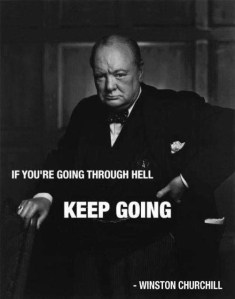
In any situation there needs to be swift action, and momentum needs to be maintained to ensure successful execution. Slowing or stopping any operation means it is difficult to get going again. It reminds me of the saying “When going through hell….keep going!”

5. Teamwork is a defining factor.

A group working together and supporting each other to achieve the defined goal will greatly lift the chance of success. Training together, working together, getting to know one another, and building trust all help to build teamwork. Good teams keep going when the going gets tough, and they overcome blockages in order to win.

6. Time is seldom wasted in planning or recon.

Taking the time as a leadership team to plan ahead for future operations, alternative scenarios, routes to be taken, areas of interest, and likely courses of action is seldom wasted. Planning and reconnaissance actually saves time, saves resources, and in many cases, people’s lives.

There are many situations in business where these skills can be applied. Strategic thinking, strategic planning, working together to build teamwork and trust, as well as incorporating a planning cadence that allows a business to quickly alter a plan and then change direction as required – are things a smart business leader does.

Influencing and inspiring people gets stuff done. That’s called “business execution” and by applying these six lessons from the Army you too can inspire your team to “fight to win.”

The Power of “Lessons Learnt” & “Reflection”

unnamed
The definition of insanity – Doing the same thing over and over again and expecting a different result.

There is a lot of research that shows the best lessons are learnt through experience and from failure. Failures can be big and small ranging. One of the leaders I admire is Winston Churchill. I have read so much of his writing and the various biographies and speeches. He had some of the most fantastic failures and also some biggest successes. His early years were a disaster and yet he went on to lead Britain and the Commonwealth to victory over Germany in the second world war. He adapted, reflected and used what he had learnt and the resulting resilience he built.

Hell
When going through hell keep going!!

Most long serving Business Owners and CEO’s have made some big mistakes over their career. Economic changes, currency fluctuations, competitor moves, technology changes have taken most close to the brink at some stage and we add to that the complexity of some bad decisions, no decisions or not changing fast enough. In fact some would say if you haven’t pushed things a bit then you are not even close to peak performance.

The ability to see mistakes early comes from that skill of being able to reflect. As a leader at any level you need to consciously build on that “gut feel” to really understand and reflect on what you are seeing; in the work place, after a meeting, in a project review, after a client discussion, during a Strategic Execution review etc. So often the skills a high performing senior leader seeks to intentionally develop is that ability to self reflect, to be able to change a bad situation, a failing plan or iterate on an initial decision. To be able to understand the impact he or she is having, needs to have and who/what needs to be influenced to achieve success. This allows a Company to move faster and to build on performance.

The ability to understand and interpret (make a professional judgement) what you are seeing, validate it by seeking feedback in many ways and to constantly learn lessons is a very valuable skill. It is especially challenging when it is “cultural/the people” stuff we are needing to interpret especially to support change. I enjoy coaching these skills and you never stop learning from others.

So some of the best leaders also have the best battle scars and the best stories to tell about the lessons they have learnt. They have adapted and overcome big challenges. The ability to tell the story, to reflect on what happened and why and how they have applied the lessons they have learnt is where the true gold lies. In fact the CEO Leadership Round Table Groups I chair in Auckland and Christchurch are based around current Executive leaders telling their personal leadership journey and generating discussion around their reflections.

In fact having to speak about your personal journey forces a significant amount of self reflection as you articulate who you are (background & history) and why you have taken the journey you have as a leader. The lessons learnt and the things they got wrong are where the gold is and it gives us the personal connection and insights.

Try writing your own story.

If you need some inspiration consider being a guest at one of our Business Round Table Breakfasts and hear some great stories.


Leadership Lessons: The 7 Big Leadership Lessons learnt in 2013

I had a great break over Christmas and the New Year choosing to holiday in Western Australia. Hot weather, sun, swimming, wine tours and time with family and friends. Anyone in a leadership role needs time out to recharge (Link here for “Business Leaders need time out) so as to stop, pause, reflect, to do other things and most importantly to plan and refocus on what is coming up.

Last year I wrote about my 5 big Leadership lessons of 2012 (Link here) It was well read and I had a lot of comments back from others reflecting on what they had learnt.

Just prior to Christmas I asked over 200 CEO’s what they had learnt in 2013 and published the summary (link here) and I’m sure this will interest you.

Here are the 7 big leadership lessons that I personally learnt as a CEO, from working closely with other CEO’s and from leading a Reserve Army Infantry Company;

1. You are not in the role to make friends. When you are making consistent, ongoing business decisions there is a need for tough calls at times. It is impossible to please everyone and it is important that the best decision is made with the best information at the time. It is important to set expectations, have the tough conversations, to be consistent with people and to do what is needed for the business. If you communicate, plan, are transparent, guide, support and develop your people then they will respect you but ultimately you are not there to be their friend. You are there to lead. Respect and friendship follow once trust is established.Image

2. Spend more time in planning. I led a lot of change in 2013. Change in clients businesses, change within ours and change within the Army. There were many times that I had to make myself plan in more detail. There were many times I had to push those I was leading and working with to spend more time in planning. Time in planning is seldom wasted. Plan, plan, plan, delegate, plan. Even when the execution phase begins and the plan changes, the fact you did some planning will help in many ways to change the plan if needed.

3. Leadership is a lonely place. There were many times that I felt the need to talk to peers. Peers at the CEO level can be hard to find. 2013 was a year I learnt the true value of mentors, peers and hanging out with like minded people. In fact 2013 was a year it dawned on me just how big the need is for more formal peer groups. This year I plan to form a CEO leadership group to support both my own growth and the growth of others working in this space. Find smart people who want to see you succeed and ask for their support, help, advice or simply hang out with them.

4. Be completely comfortable in your own skin. I think authenticity is an absolute essential element of leadership. Being open, transparent, frank, including others in planning, decision making and problem solving makes things easier. It is easier to take others on the journey with you and it builds a high performance culture. I observe many leaders who like to keep a gap between their work life and personal life. I feel that if you are genuine and authentic then there is no gap. That does not mean you should not have privacy, rather I mean ‘be truly comfortable in your own skin.” Be aware of your own strengths and weaknesses, be comfortable with them and most importantly play to your strengths. Be who you truly are and lead yourself well in the first instance!

5. Be tough on people. Be brave on the people stuff. Be clear in your expectations, lead the way, guide, support and mentor but be consistently tough on your team. Be tough on standards, performance, hitting agreed targets and KPI’s. People need toughness to get the best out of them. Doing their job for them or accepting poor performance not only lets those individuals down but it means the A Players in your team will lose respect for you as a leader and motivation in their work. It is the number one culture killer.

6. The importance of your own leadership framework. As a professional CEO (leader) you must be clear in your framework of planning, meetings, mentoring, communicating & leading through other clever people. It should be possible to drop any professional CEO into any organisation and for that individual to lead it. Take the time to identify and formalise your framework and constantly review, refine and improve it. High performance leaders commit to ongoing training, coaching, mentoring and a life of learning.

7. My heroes are people who get stuff done. I am not into movie stars or celebrities. Rather I respect and enjoy learning from leaders who make stuff happen, people who are brave enough to risk, experience and overcome failure to reach the top of their field. The likes of Mandela, Churchill, Hillary, Buzz Aldrin. I enjoyed reading a book over the break about Air NZ pilot and mountaineer Mike Allsop. I find they are genuine, tell of the fear, effort and lessons learnt and it is possible to learn something from each of them.

So as we line up 2014 as a busy year in business I think it is important for any leader to reflect on what they have learnt and to write them down. Discuss them with your team, peers or family. What did they learn? How can you build on your lessons learnt?

I’m looking forward to the year ahead and the opportunities and challenges that are already on the horizon. How is 2014 looking for you? What are you doing to grow yourself as a leader and in turn those you lead?