Leading Leaders: Thriving in Change

We believe that in order to thrive (not just survive….thrive) in the future and an ever changing business environment, Leaders (and Businesses) need to constantly adapt, change, iterate and to lead their people with certainty.

This mission involves working with Business owners, Board Chairs and CEO’s who are looking to invest in their own leadership skills, grow other leaders & develop a clear strategic execution plan which they can execute continuously. The latter “Execution” piece is the important bit.

This is about getting things done, prioritising the important things over the urgent (disrupting business as usual in a good way) and leading behavioural change. This is getting the people in the business to change and do different things & sadly our world is full of people with great ideas but not people who can bring these ideas to life practically.

This short video outlines some of the work we do with long term clients as we support them to lead in change, succession and execution.

https://youtu.be/bnI2uOhrmoA

Lessons Learnt From The Army: How to Fight to Win

IMG_1308
Leading NZ soldiers is an incredible challenge, responsibility and privilege.

Much of my working life has been spent as an Army Officer, initially as a regular and later in the Reserves. I have found that the skills I learned and applied leading soldiers are very relevant and transferable for leading teams and driving business execution; especially in this increasingly dynamic and ever changing marketplace.

As you can imagine, the challenge of leading men and women who are working in dangerous roles in challenging environments requires a high level of trust, empathy and teamwork.

The Army places great emphasis on leadership skills and invests heavily in leadership training and development at all levels. Training courses to enhance leadership skills continue right through to those at the very highest ranks of the Army.

Here are six key things that the Army teaches their leaders in order to “fight to win”:

1. Remain calm under fire.

That’s not to say that fear is not present, in fact it is. However, to “keep calm and carry on” regardless of the situation is something you can learn. It is the golden rule for keeping your head and working through a logical process in order to respond to a hostile or changing situation. Being calm and thinking clearly are essential requirements to evaluate what is happening and to make effective decisions.

2. Any plan is better than no plan.

Without a plan you cannot inspire others to follow you. Having a plan is the starting point for successful execution. Even if the plan is not the right one, making a decision and creating a plan will save lives and generate positive activity. A good team will back itself to quickly adjust a plan so that it is effective.

3. No plan survives the start line.

The Army recognizes that in every situation there is another party that can influence the situation. Not just the enemy, but terrain, equipment, weather, civilian populations, and even animals can influence a plan. All the various scenarios that might happen should be considered and planned for so that the plan can be quickly adjusted if required. The fact a team has planned and engaged together allows it to quickly iterate the plan as needed.

4. Maintain momentum.

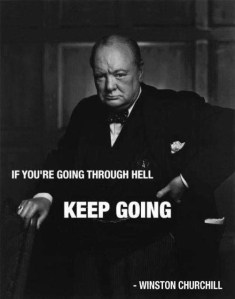
In any situation there needs to be swift action, and momentum needs to be maintained to ensure successful execution. Slowing or stopping any operation means it is difficult to get going again. It reminds me of the saying “When going through hell….keep going!”

5. Teamwork is a defining factor.

A group working together and supporting each other to achieve the defined goal will greatly lift the chance of success. Training together, working together, getting to know one another, and building trust all help to build teamwork. Good teams keep going when the going gets tough, and they overcome blockages in order to win.

6. Time is seldom wasted in planning or recon.

Taking the time as a leadership team to plan ahead for future operations, alternative scenarios, routes to be taken, areas of interest, and likely courses of action is seldom wasted. Planning and reconnaissance actually saves time, saves resources, and in many cases, people’s lives.

There are many situations in business where these skills can be applied. Strategic thinking, strategic planning, working together to build teamwork and trust, as well as incorporating a planning cadence that allows a business to quickly alter a plan and then change direction as required – are things a smart business leader does.

Influencing and inspiring people gets stuff done. That’s called “business execution” and by applying these six lessons from the Army you too can inspire your team to “fight to win.”

The Power of “Lessons Learnt” & “Reflection”

unnamed
The definition of insanity – Doing the same thing over and over again and expecting a different result.

There is a lot of research that shows the best lessons are learnt through experience and from failure. Failures can be big and small ranging. One of the leaders I admire is Winston Churchill. I have read so much of his writing and the various biographies and speeches. He had some of the most fantastic failures and also some biggest successes. His early years were a disaster and yet he went on to lead Britain and the Commonwealth to victory over Germany in the second world war. He adapted, reflected and used what he had learnt and the resulting resilience he built.

Hell
When going through hell keep going!!

Most long serving Business Owners and CEO’s have made some big mistakes over their career. Economic changes, currency fluctuations, competitor moves, technology changes have taken most close to the brink at some stage and we add to that the complexity of some bad decisions, no decisions or not changing fast enough. In fact some would say if you haven’t pushed things a bit then you are not even close to peak performance.

The ability to see mistakes early comes from that skill of being able to reflect. As a leader at any level you need to consciously build on that “gut feel” to really understand and reflect on what you are seeing; in the work place, after a meeting, in a project review, after a client discussion, during a Strategic Execution review etc. So often the skills a high performing senior leader seeks to intentionally develop is that ability to self reflect, to be able to change a bad situation, a failing plan or iterate on an initial decision. To be able to understand the impact he or she is having, needs to have and who/what needs to be influenced to achieve success. This allows a Company to move faster and to build on performance.

The ability to understand and interpret (make a professional judgement) what you are seeing, validate it by seeking feedback in many ways and to constantly learn lessons is a very valuable skill. It is especially challenging when it is “cultural/the people” stuff we are needing to interpret especially to support change. I enjoy coaching these skills and you never stop learning from others.

So some of the best leaders also have the best battle scars and the best stories to tell about the lessons they have learnt. They have adapted and overcome big challenges. The ability to tell the story, to reflect on what happened and why and how they have applied the lessons they have learnt is where the true gold lies. In fact the CEO Leadership Round Table Groups I chair in Auckland and Christchurch are based around current Executive leaders telling their personal leadership journey and generating discussion around their reflections.

In fact having to speak about your personal journey forces a significant amount of self reflection as you articulate who you are (background & history) and why you have taken the journey you have as a leader. The lessons learnt and the things they got wrong are where the gold is and it gives us the personal connection and insights.

Try writing your own story.

If you need some inspiration consider being a guest at one of our Business Round Table Breakfasts and hear some great stories.


7 Deadly Sins of Ineffective Governance

IMG_1713
Good Governance takes planning, good agendas and skilled forward thinking Leaders who can contribute to the future direction of the Business.

We get to work with many Advisory Boards and Boards of Directors as we facilitate Strategy & support Strategy Execution & support business owners to either initiate, restructure or optimise their Governance. This requires us to facilitate meetings, sit on a number of Advisory Boards and I currently act as Chairman on one Board of Directors. Sadly I would have to generalise that Boards are, in the main,  either ineffective or not as valuable as they could be. In fact one of the big opportunities that will ensure Business success I see is to successfully implement highly functional governance. Those that do have it in place have the opportunity to get the maximum return on their investment by taking it to the next level.

Here are what I call the 7 deadly sins of Ineffective Governance;

1. Undermining the CEO: Unknowingly they get in the way of their CEO by getting involved in the workplace, not supporting or trusting the CEO’s recommendations or initiatives. In fact  many do not trust or have confidence in their CEO full stop and worse still do nothing to address it.

2. Discussing the “how” but never defining the “what”. Many Boards Spend most of their valuable discussion time dealing with management decisions ie How should this be done? Yet they never pose & define the big questions such as what are we building? Where are we taking this? What could and should we become as a Business?

3. Not understanding the sacred relationship between Chair and CEO. It is a special relationship and the most critical one. It is an employment relationship and one in which the Chair should coach, mentor, guide and support the CEO to succeed. This includes professional development and tough conversations around delivering outcomes. It involves building trust and confidence and aligning the Board to support their CEO.

4. Never altering the composition. The Board should regularly change or include leaders with the skills the company needs as it develops and grows. As the company grows and evolves so too should the BOD as they keep the CEO and Management ahead of the game.

5. Sweating the small stuff. Particularly prevalent in family businesses is the tendency to never get breakthroughs on the sacred cows. The same conversations, fears, egos repeat at every meeting. The elephants in the room are never addressed and therefore they never go away.

6. Focussing on the negative. It is very easy to see what is going wrong but never acknowledging what is going right. Negativity kills culture and creativity. Problems must be addressed but seeing the good stuff and encouraging more of it is a key role of any leader and Directors are leaders. Negative meetings that focus on what has not worked and never inspire what could be great are unfortunately common place.

7. Not defining success. Clever strategy, KPI’s & metrics must all be measured and success defined so the CEO knows he/she is on track and so that management measures can also be clarified. Too much time  in Board meetings is dedicated to historical results ie they can’t be influenced. Whilst reviewing the results and banking lessons learnt is very important, so too knowing the business is on track for the the future is arguably more important and productive. You can’t influence the past nor be inspired by it. The role of Governance is to take a business forward and to help Management to navigate the ambiguity of the market.

By getting the agenda right, tweaking the composition, by becoming future looking and building complete trust in the CEO, a BOD can very quickly make a massive impact on business performance in a very short timeframe. Sadly it is poorly done and this inspires mediocre results.

How is your Governance? Do you have any? How effective is it? What could it achieve for your biggest investment?

Feedback from Over 200 CEO’s: What they Learnt in 2014 and the Challenges They Face in 2015

leaders

Last year I went out to our Company network of Clients, thought leaders & Business leaders and asked them what they had learnt in 2013 and what they felt they would face in 2014. I was overwhelmed with the response and it took a lot to collate the feedback and to be able to articulate it. The resulting blog was one of my most read across 2014 (Link to it here).

This year I asked the same network (which of course has now grown quite extensively) the same questions. This includes Chief Executives of both publicly listed and privately held Companies across a vast range of industries. Mainly New Zealand and Australian Companies but also the USA and Canada. Some good friends (including John Spence) put it out to some of the Chief Executives in his North American network who also happily contacted me.  I also asked my wide Military network of leaders (many still serving & many leading organisations all over the globe) and included senior leaders from other Government Enterprises. During 2014 we also had ongoing feedback from over 1000 business leaders who attended our speaking and leadership training events. Many of these were introduced through ASB Business banking and partner relationships with other professional services leaders including Accountants, Legal Firms and Leadership and Strategy Consultants and some of the Business Bank staff themselves from both Westpac and ASB.

I got some fantastic feedback and I thank all those who put so much effort into answering the questions I posed. Many commented to me on just how valuable they found it to have a reason to sit down and reflect on 2014 and the year ahead. Many also realised just how busy they have been, how much change they have been leading and just how much they have achieved. I worked through all this feedback before rereading the blog I wrote in November 2013. There are similar themes around talent but it shows definitively that the rate of constant change has really started to increase. More so than in 2013. This is particularly so in Christchurch (post earthquake boom) but is also reflected across all markets, countries and is the new big challenge for Chief Executives regardless of the size of their organisation.

What were the Leadership Lessons you learnt in 2014 (and/or Observations you have made);

1.   “Change is Constant and is Both the Opportunity and the Challenge”: The Rate of Change is Increasing. Almost every respondent referred to the impact and effects of change and the challenge of getting things done (Execution). There is more change and it is constant. Leading through change is challenging and many referred to “expecting the unexpected” or the possibility that anything could happen (especially unplanned) and there was a need to iterate, be flexible and involve your people. To avoid stress the best method was learning “not to sweat the small stuff” or to “roll with it”. Self reflection was important as was having someone external who could help a leader to see the bigger picture and to take a more “unemotive” view point as to what was going on within their team/company. Planning was seen as important and doing more of it than ever before. Many feel it is important to develop new/better leadership skills to be able to lead change and to be able to get “stuff done”.

2.  “Technology and the Younger Generation of Workers is having a major Impact”: Technology change and innovation is now affecting all leaders in some way. New cloud based software applications and mobile smart phones (and devices) are allowing for better information. This brings the challenge of training to use them effectively, integrating different software solutions and needing the work force to have different skill sets. Talent is hard to find, attract and retain and they expect different things. Collaboration (and a sense of fairness) is how young, smart, technology savvy employees work and thrive and this is now starting to show across the board. Challenging top talent, encouraging innovation and new ideas and building a high performing culture is key to retaining top people.  On top of that, holding employees accountable to doing what they say they will do and getting them to consistently be highly productive has been a big challenge in 2014. Learning new leadership skills, building cultures that allow a “work/life” balance and training people has been a focus for many Chief Executives. Dealing with non performers is recognised as critical, most want to be better at it and have a desire to weed the “culture killers” out faster than they currently do. The challenge of growing as a “Leader” was referred to time and time again.

3. “What your Client Thinks and Says about your Company is Critical to Growth”: The last big theme to come through was reputation, brand strength and client loyalty. In an increasingly global economy and with the impact of social media, it is important to have people who love your products or services. Many Chief Executives referred to “getting cut through” in a busy market, being close to key clients and asking them regularly for feedback. It was generally accepted that print media is dead and that the future lies in the online, digital and social media space. Smart branding, immediate feedback (positive and negative) has a major impact on business growth. Most Chief Executives want to get better in this space, many are very involved and some (approximately on third of respondents) felt they would never catch up or get ahead of the change in this space. Many felt that getting their culture right and by having engaged and well trained people that clients would be taken care of and there was a desire to be able to canvas clients more easily (for feedback) and to measure it.

The next question I asked was “What are the challenges you feel you will face as a Leader in 2015?”

1.  “The challenge of finding, recruiting, training and retaining top people is the Number one Challenge”. By far the most respondents considered the challenge of getting good people to join and stay in their Company as the biggest challenge they feel they face in 2015. Making it happen, getting better at recruiting, identifying top performers and then leading them is considered to be a major development area for the future of their organisation.

2. “Leading in Uncertainty”. A big challenge in 2015 is being able to lead in uncertainty. How to lead young people, other leaders, people in their team who are smarter and more technology savvy during times of change & uncertainty is a concern of many respondents. Understanding how to motivate and lead when the way ahead is unclear or simply unknown is something may want to learn about. A fear of making big mistakes, a need for good advisers (Financial, Strategic, Governance) was a major theme as was the feeling that the leadership space is a lonely place. More mentors and people they can trust, as well as interaction with peers and other leaders in similar situations were identified as being of high value to them in 2015 and leading in the future. Delegating to others to get things done was also seen as being critical to growth in the year ahead as was getting closer to customers and planning at the operational and strategic level.

3. “Focus and Getting things Done”:  How to get “cut Through” or “focus” is seen as being more and more importance. 2015 will require more execution of the important things. Many want to spend more time planning and getting things done. Separating the “urgent from the important” is increasingly important to maximising production, resources and profitability. It is also getting increasingly harder to achieve. Focus on which customers to deal with, where and how to Market, what technology tools to invest in etc are all seen as key to getting really clear on what needs to be done. Then the challenge is to actually “make it happen”.

These were the main feedback areas that i have been able to collate. Of course there were hundreds of other comments, thoughts and reflections. Some themes that came through in not particular order;

  • A desire to have access to like minded networks of people.
  • Many are preparing for the next economic downturn and actively wanting to retain people & capability.
  • There were many who face the challenge of remaining profitable and competitive and the challenge of retaining and growing market share.
  • There were many facing succession challenges.
  • Getting better governance was a theme. Really valuable Board level advice.
  • More planning and third party reviews.
  • Specialist and generalist Leadership training is in high demand. In fact a recognised need for training in general is constant.
  • Learning to negotiate and lead in partnerships and in a more political (competitive) environment is needed by some.
  • Delegating and learning to trust.
  • Many Directors spoke of the need for them to get out of the way more. To let their people step up and own their roles.

Actions not words!

Overall this has been an interesting and humbling experience. It is a privilege to interact with clever and busy leaders and to hear their reflections and desires. It is useful for us as an organisation that “Leads Business Leaders” because in effect it helps us to deliver better high value services which will truly support and assist those who we work with. That said most of the stuff identified here does not cost a lot of money. In the main it requires a focus on some of the Leadership or “softer skills”. The ones that are least talked about and the least trained for. It requires some change to the way you may interact, spend your day as a Chief Executive or what you will measure and therefore manage.

So what have you learnt in 2014 and what do you think you will face in 2015? Are you planning to succeed? Are you doing enough to stay ahead of change, technology and do you really know what your clients think about you?

Have a happy and safe Christmas and New Year and a big thanks to all those who have offered their feedback and thoughts.

Leaders

Other stuff I you might like;

– Our social media wall which collates all our feeds and many other high values Leadership and Business resources. (Link Here)

– My Linkedin profile if you want to connect (Link here)

– Pride, Passion and Excellence. What I learnt from Anthony Leighs, CEO and Founder of Leighs Construction (link here)

Making High Performance Leaders Better

I do a lot of work with high performance leaders. In fact I have just completed a survey which I will share over the coming weeks about their key learnings over the last 12 months and what challenges they expect to face in the next 12 months to bring.

Executive leadership coaching is a growing part of my practise here in Christchurch that is growing by referral and it involves working with high performance, experienced individuals in key leadership roles who want to get better at their craft. This link (read here) explains why leaders need to be aware of their “blind spots” and how some good coaching can take them to a new level of influence over their teams and key people. Leadership at the senior level is about leading through others. In itself this involves coaching, mentoring, developing and getting key managers better at their game…..better a delivering results, better at leading their own parts of the business.

Image

I work with CEO’s in a number of ways. Firstly to help build their strategy and then to help roll it out across the company. Primarily this is about “Business Execution” or executing the strategy. This is a major challenge in amongst the chaos of “Business as Usual.  I now have a number of high performance CEO’s from prominent companies seeking what I term “professional development.” They work virtually or travel from around the country to invest in their own development. This involves working with them in a high trust relationship to get them better at their craft. It involves the following;

a. Being a sounding board. Leadership is a lonely space so having someone with no other motivation except to see them succeed is something that is of high value. Someone outside their organisation, outside their team and outside of the Board of Directors. I have some who simply want to spend time and talk through key decisions and to help them get clear on their thinking and why they think that way.

b. Challenging their Blind Spots. We all have them and this is an area I have worked hard on myself. Better self awareness, better situational awareness of those we lead, key strengths and how to play to them and how to build the skills in your team to cover weaknesses. Empathy for others and tools for getting the best out of people are generally at the top of the list of these important “soft skills”.

c. Building a Framework = Finding Time. Generally CEO’s are very time poor. Finding time for them is key as we challenge how they might structure their week, month & year. A good cadence of team and one on one meetings, time for strategy, review, lessons learnt and strategic thinking all form part of this along with the disciplines required to actually execute such a framework. One of the biggest things I find is that busy leaders do not take time off. They risk burn out, lack balance between work and family life and few give themselves the time to recharge. As a leader of a large organisation you are responsible for feeding a lot of families. You have an obligation to be at the top of your game so you can make the best decisions and deliver the best results. Time out is critical and the discipline to make it a priority is key.

d. Building on Strengths. The best return on investment is to play to and build on your strengths and to build a team around you to do the bits you are not so good at. I find many leaders who beat themselves up for the parts they struggle with and often they focus on these negative areas. Why focus on things you are not naturally good at and tend to loath doing?

e. Execution. Actually supporting leaders to do what they set out to do. Everyone needs accountability and in a space where performance is key everyone needs a push to get out of their comfort zone and to seek excellence. Real situations require practical solutions and one thing I really enjoy is working with leaders to actually do what they need to do.

f. Seeking Excellence. As in high performance sport any % gained is pure gold. It is easy to lift performance from say 65 – 85%. But every % over and above 85% (or however you like to think of it) takes conscious effort, focus, trial and error and execution with a focus on measuring progress. A leader is only as good at their last game so building on performance, banking lessons learnt and pushing outside comfort zones is key.

g. Providing the Right Network. I certainly do not claim to know what it is all about and I challenge anyone who can. Leadership is a journey (not an event) and having the right peer group, mentors, exposure to research, case studies, stories/examples, academic courses and others who are on the same journey is an absolutely critical part of developing talent and talented leaders. I see my role as providing the right things at the right time to build personal networks.

h. Leading in Change & Enabling Culture. The pace of change is fast and continuing to get faster. Technology, competitor moves, globalisation, client expectations, economic conditions have never involved so much change. How do CEO’s lead in times of constant change and how can they enable a culture that top talent wants to be & remain a part of? The culture of an organisation is a strategic advantage that no competitor can steal so enabling a culture of excellence, that is resilient to change, is innovative and close to the customers needs is critical to growing and leading a business.

Working with high performance leaders is one of the things I love about my role. It is satisfying, challenging and I learn a lot about leadership, different sectors and different companies. The common theme is that no one actually teaches you how to lead people & how to get the best out of them. It is not a University course or a seminar or an event. Everyone you meet can & should teach you something and without doubt it is one of life’s ultimate challenges.

Are you working with someone to help you get to the top of your leadership game?

The Art of Storytelling

The Art of Storytelling

Story telling is a powerful way to get ideas across. We are genetically wired to enjoy them. The best leaders “manage by storying about” and it is a great talent to be able to highlight things through real life examples. This blog (link here) is worth a read because it touches on storytelling and why is is important.

“When a man die…

“When a man dies a library burns”

Read that quote recently again and it is so true. A little like losing a key long term employee, many years of collective knowledge and learning goes with them. Leaders at the top of their game never stop learning. They commit to the pursuit of excellence and continually look for new ideas, incremental improvements and different ways of lifting the bar.

This week we have a CEO leadership event here in Christchurch with Bruce Cotterill speaking about how he has built culture, achieved success and turned several companies around including Yellow. I am looking forward to many of our clients attending and the discussions that follow of from such an event.