

Our company culture is a critical success factor in our business. We took some time out to articulate what our culture is and how we approach our work as a team.
Anyone Can Lead in Good Times

Anyone can lead in good times, it’s when things are tough that you really see the best leaders in action. At present we are seeing decades worth of change occurring in days as the economic, social & health impacts of Covid-19 reshape whole industries, relationships between countries and the purchasing habits of people globally.
Without a doubt what is setting those businesses with a real future apart from those who are dead in the water are the people leading them. The strategic & proactive boards of directors, the inspiring CEO’s and the tight leadership teams supporting them to deliver change & business outcomes. The great news is that even in constant change some things never change but they are now even more important;
- Inspiring a vision for the future: Leaders must be able to show a brightness of future by articulating a Vision for success. The road leading there might have pivots and turns but being able to quickly paint the future and to sell it to those you lead is the basis of inspiration. People want to be inspired & well lead. Keep the Purpose of the Company at the forefront of all you do and live the values.
- Team first: Your team composition, sense of tightness, professional skills, engagement and focus will ensure your clients are well looked after. Your team always comes before clients. This means team meetings, one on ones and planning sessions are priority number one. Have fun, live the values, over communicate & ensure the tough conversations are on the table.
- Being close to your clients: Know what is going on with them, what they need, what they value & how you can help them. Call them, video them, survey them and focus on their success and wellbeing. There has never been a time that this is more important. Solve their problems by knowing what keeps them awake at night.
- Partnerships: Partner with the best suppliers & collaborate with competitors & other like minded organisations within your supply chain. Long term & win/win solutions that keep clients at the centre of all you do add massive value to your business ecosystem.
- Plan, Plan & Plan: Contingency planning, involving the collective skills of your Board of Directors, Advisory Board, external Advisors and leadership team often and regularly keeps you ahead of the curve. Having had difficult discussions and having modelled financial scenarios allows a fast transition as the situation evolves. Bank the lessons learnt and constantly challenge the status quo – reimagine what is needed to deliver success in the future. Make good clear decisions & iterate them as the situation changes.
- Ask for Help: Seek Support & Coaching: Any leader at the top of their game needs an eco-system of people around them whom they can ask advice, share reflections with and in many cases share ideas. Some of these are coaches you pay for but most are peers and people in your network whose advice you value. Hang out with them often and shoot the breeze. You can’t get it all right but with a good network it is hard to get the big stuff totally wrong.
- Invest in yourself: Keep fit, sleep lots, hang out with family/friends & find time to read, watch videos and learn. Reflect in writing and revisit these ideas and reflections often as you plan.
In tough times those who can adapt, learn, inspire others and who take action early will have the resilience to succeed.
“Anyone can lead in good times” – You earn your money as a leader when times are tough.
Leadership Insights: Massive & Sudden Change
Today John Spence & I spent some time reflecting on the impact of the the Covid-19 lockdowns and how it has impacted business and leaders in both NZ & the USA as we work hard to support their teams.
2019: Leadership Lessons I have Learnt

2019 has been a fantastic & full on year working as part of a talented team and supporting some of the top companies across New Zealand, Australia and the USA. It is important to reflect on achievements, leadership lessons and to recharge in preparation for the projects we are taking on in 2020……..a new decade.
On the home front a baby girl (Sahara) joined our family on 30 Dec 18, so it’s been exciting having another wee one in the house. We moved house, our eldest daughter graduated from St Margarets College & was accepted to study at Canterbury University next year. Our wee boy turned 2 so home life was hectic with many firsts such as talking, walking & other family milestones. It’s been a year where sadly some good friends have died & we’ve supported close family (& several clients) with cancer. So it’s been fulfilling but certainly not plain sailing!
It was my 15th year of self employment, I took 53 domestic & international flights, completed 143 physical work outs (not enough), slept on average 6 hours per night (more needed) & Averaged 9907 steps per day (stats courtesy of my Fitbit). I delivered 208 one to one coaching sessions (for directors, CEO’s and executive leaders), facilitated 23 strategic planning sessions/reviews, developed & delivered 18 one off leadership workshops for Executive Leadership Teams & attended 34 Board & Advisory Board meetings (chairing 31 of them). I took seven weeks off to recharge, rest and have time with family.
In my Army role as an Infantry Battalion commander we have led change, deployed soldiers on operations & been involved in responses to fires in Nelson & floods in Westland as well as the Christchurch mosque shootings which rocked our nation to the core. 2/4 Battalion joined the Army’s operational 1st Brigade (NZ) in July & this role was 67 days work of my work. S
In governance roles there was challenge, break throughs & pivots. During a visit to the USA in my role as Link Engine Management Chair (along with our CEO) we visited some of the top companies in the world (Google, Apple, Facebook, Air BnB, AllBirds amongst 10 others) that since start up have been client centric & design thinking focussed. This was part of a NZ Trade & Enterprise “Better by Design” Tour and involved leaders from 20 NZ export companies. This was a life changing learning experience, as we visited New York & San Francisco over 10 days. I learnt so much about client centricity, culture by design & leading change.
In my role as part of the University of Canterbury MBA Advisory Board, I was lucky enough to be able to have a small part in a bold modernisation of the UC executive leadership programme. A move that reflects the current reality of business leadership and (in my personal opinion) it will allow UC to become one of the most innovative & relevant tertiary providers in the country for experienced leaders looking to pivot their career & lift their leadership impact.
As a business owner we have lived what we teach. We have grown our team numbers & our revenues & profits by 25%. This is an outcome of working with some fantastic clients & business partners & invest in in long term trusted relationships. Our approach supporting chairs, boards, business owners, CEOs & Exec teams to get significant break throughs, has been recognised in the market through growing referral networks. We have measured staff engagement & client loyalty via bi annual surveys & used this information to build on our offering. The Christchurch team will be delivering 22 pre booked leadership workshops in January & February 2020 alone so it is going to be a busy start to the year.
So what leadership lessons have I learnt over the year?;
- Business Leaders need to get serious to lead in constant change. It is time lift to your game if you want to succeed globally. Whilst we have some fantastic NZ companies doing very well internationally (in fact a number are clients), they have invested heavily in intentional, qualified and experienced leaders who focus on culture and inputs rather than just the outputs. Too many businesses aspire to compete at a high level but leave their leadership to chance. They invest in the best independent directors, executive leaders and strategic thinkers with an emphasis on execution combined with client focus and great products/services and constant adaptability. The old NZ “no 8 wire” attitude, whilst important to drive innovation, won’t cut it alone in a complex market environment. The best companies in the world value and invest in not just innovative/smart ideas but also qualified and experienced talent led by high performing leaders.
- Most leaders won’t have the courageous conversations needed. The number of senior leaders who simply won’t lead a tough conversation or confront poor behaviours (which are a pre-curser to poor performance) is staggering. Those who are action orientated, care deeply about their people and who will initiate a courageous conversation before it results in a big issue are rare and highly sought after. Most hide behind a complex process as a reason for not taking action. In reality they simply don’t have the courage to start what is a simple & effective process.
- Stop focussing on outputs and focus instead on the inputs that deliver them. Too many react to results after the fact and it is too late. Spend time creating clever predictive metrics that guarantee the results you are after and create a culture that consistently measures & executes them.
- Schedule, value & prioritise unstructured time. Most leaders are simply “busy & sadly that means reactive. They have no time to get ahead of the market and competition because they don’t prioritise the time needed for professional development, strategic thinking, reflection, banking lessons learnt, building strategic relationships or hanging out with clients understanding their needs. There are too many leaders who were the badge of “busyness” with pride and it creates mediocrity and reactive companies. Self discipline is needed to keep the important things ahead of the urgent.
- Invest in a future focussed Board that reflects the voice of your customer. Who on your board represents the voice of the purchaser of your products or services? Too many boards spend their time looking backwards instead of setting the culture of the business and driving the strategic agenda. To win in todays constantly changing & dynamic business environment the conversations of shareholders, directors and management must be separated, defined and deliberate. Get serious about it & have both a succession plan & professional development for your board.
- If you sword fight with Zoro you will get cut. As a leader there is always someone who thinks they have the solution or is hyper critical of a decision. In reality to lead at a high level you need to have confidence & clarity. Make the best decision you can with the best information available at the time and iterate it as needed. Leaders stand for something, they can take a punch and are resilient enough to carry on and win. It therefore stands to reason you will make a few mistakes, get things wrong, piss a few people off and attract the armchair critics. Accept this, reflect and commit to being always a better leader, stay true to your values & purpose and surround yourself with a wide network of coaches, mentors & peers who want to see you do well. Most importantly enjoy the ride because executive leadership is one of the most challenging & satisfying things you can do in the world. Most people can’t or won’t step up the the plate & thats fine……there have to be followers.
So overall 2019 has been a fantastic year. There have been the challenges of leadership and people that every business faces. Highs, lows and everything in between. Without a doubt the best things have involved family and friends growing and changing. Many of our clients have won national and international awards and their energy and thirst to get better and better has inspired me to keep learning and to get better at what I do professionally. As a professional leader it doesn’t really get much better than that & in the world we live in we require adaptability and agility to navigate the change we face over the coming years. Thank you for letting us play a small part in your leadership journey…….I really value it.
That said it is time to have a break, to disconnect, to have a beer (or 3) and to recharge over the summer break. Hows 2019 been for you? What valuable leadership lessons have you learnt?

What I Learnt at Google
In early September in my role as Chairman of tech company Link Engine Management Ltd, the CEO & I went to the USA as part of the New Zealand Trade & Enterprise Better By Design Service. We are a company that works closely with and highly values the business advice, market support and development funding opportunities provided by NZTE as we expand across the USA.

The Purpose of the trip was to immerse ourselves in some of the best companies in the world that have been client centric in their design thinking since start up. Along with 15 or so other prominent NZ export businesses we visited 15 different companies in both Manhatten, New York & in San Franciso. Companies such as Apple, Facebook, Air BnB, Chabani, WW (formerly Weight Watchers), Sidewalk Labs & AllBirds. I say total immersion because it was like drinking out of a fire hydrant in terms of what we learnt and reflected on. We had unprecedented access to C-suite executives ranging from CEO’s, Founders, Chief Development Officers etc. Weeks later I am still distilling the many things I learnt as a Chairman, Strategy Consultant, Leadership Coach and Business owner.
Google stood out due to its prominence as a brand, size & scale. With annual revenues of $137Bn USD, over 100,000 employees globally working across 9 products (each with over 1 Billion users) it can take some time to get your head around.
Here is what I learnt from Google;
- Don’t screw up the culture: Culture is key and it drives every aspect of life at Google. Like most of these companies we visited, the war for real talent is very real & like Google most are feeding their staff 3 meals a day and making life easy to do great things. Behaviours, teams, leadership & soft skills are prominent and highly valued. In fact if you work against the team you will be fired no matter how brilliant you are. Work hours are 9 – 5 and working long hours (or weekends) are actively discouraged & this behaviour is modelled by senior leaders.
- Hire slow, fire fast: Google undertake 8 interviews in the recruitment process over a number of months followed by 4 months of induction. It is hard to get in and if over 2 quarters you don’t perform staff are exited (after coaching, mentoring and clarity around KPI’s).
- Cultural add: Whilst cultural fit is important more, front of mind at the hire stage is the Cultural add. What will you add to our culture. This is where they actively find diversity and give mandate for new employees to add and enhance the culture and teams they join.
- Unstructured time: 20% of all employees time is unstructured and they are expected to work on projects within the company they are passionate about. Projects that solve company problems or move Google forward.
- KPI Clarity: KPIs range from hard numbers to softer KPIs such as failures. Failure is encouraged if employees learn the lesson & teach others in the company the valuable lessons. The expectation is the lesson is not learnt again. They don’t focus on the outputs in terms of their KPI’s, they focus on the inputs that guarantee the outcomes they seek. Feedback is constant and 360 via platforms that allow your team, your peers, your bosses to give live 360 feedback. This is the same from the CEO down.
- Be the Best at What you do: Like many of these companies Google expect you to be the best at what you do. If you are in the technical stream they expect you to be at the top of your game & getting better. If you are leading teams they expect you to be the best leader. A key point here is you don’t have to lead people to advance (role & remuneration) if you are a technical expert. Consider that in most NZ businesses where the only way to advance your career is to lead bigger teams!
- Client centric: The work spaces are designed for learning, to stimulate innovative thinking, to break down silos and status quo thinking. The client is at the centre of all the products & services they develop. 9 products each with over 1 billion users. By having break out areas and fantastic working environments there will be a minimum 9% lift in productivity & very high engagement.
- High levels of trust and autonomy: Employees are expected to perform, trusted to
 do what is needed, can buy the equipment they need and travel, accommodate etc by choosing from a range of providers. Money they save the company in expenses are shared 50% with the employee so there is incentive to be smart.
 - Fail fast: New projects are well led and it takes strong leadership to fail fast, to decide to stop a project.
- Get Serious: Most New Zealand businesses with the aspiration to grow globally need to get serious. Invest in competent, forward thinking & qualified directors that will challenge the status quo & most importantly support the CEO & management team to upskill & excel. A client centric intentional Culture enabling seriously talented & experienced people to do great things will ensure companies iterate & adapt. They need to invest in the advice, skills & technology that allow them to scale. Most importantly defining true purpose & a long term compelling vision is as critical as telling the story.
Many of these things challenge the way we think and certainly to the level they could be done. In my discussions many NZ business leaders are dismissive of Google given its size & scale ie it is easy to do this when you are a huge company. I make the point that Google started with a clear vision & purpose in 1997 and is only 22 years old.
Where will your company be in 10 years if you start focussing & executing on some of these important things & get really serious about attracting and leading top talent?
The investment by our company in this experience was significant but the networking and relationships formed with a really talented cohort & the business leaders we met provided a massive return on investment. This combined with the ideas we have decided to execute and the input from a very talented NZTE host & design thinking team will allow us to continue to navigate our future growth aspirations.
Thank you NZTE.
4 Game Changers to Improve Execution
One of the biggest challenges and frustrations that business leaders have in 2018 is how to execute their Strategic plan to ensure the future success of the business. Over the last 18 months we have conducted in depth surveys with 161 business leadership teams across New Zealand, Australia & the USA asking them 35 key questions over a 2 hour gap analysis assessment.
When it comes to Disciplined Execution the basics really count and the surveys highlighted a common gap in four areas as highlighted by the data;
- Role Clarity: 110 (68%) of the 161 teams interviewed had not clearly documented who was accountable for key roles in the business & how their performance would be measured. It stands to reason that if there is no real role clarity then there will be overlaps in effort, low levels of accountability & frustrations. In many cases roles had not been updated as the team grew, head count increased and the company evolved. Putting in the effort to document and get clarity on roles and measurements makes a huge impact and is an engaging discussion to have as a team.
- Consequences: 106 (66%) of the 161 teams had staff that did not know the consequences for achieving (or not achieving) the performance standard required for their role. Without praise and recognition for great work (catch people doing things right) there is no incentive to go above and beyond. Likewise if poor performance is not confronted it becomes hard to perform as a team and good people leave due to the mediocrity that is tolerated. These topics should be discussed as a team so there is clarity which will in turn lift engagement. (See “The Power of Consequence”).
- Meetings: 117 (73%) of the 161 teams did not conduct well-structured “execution meetings” with team members on a weekly basis. Most leaders hate meetings and their team members hate being part of them. Yet if you lead people you need to be excellent at leading engaging team meetings that allow you to live your culture. What makes a great meeting? Respect for time, never cancelled, clear team rules, being prepared, having each attendee speak to their numbers, a review of results, clarity on future actions, updates on strategic actions/projects, documented decisions (who, what, when), core value stories, connection & fun as a team. A clear cadence of meetings will make a huge impact on team engagement, execution and will maintain momentum.
- Quarterly Reviews: 132 (82%) of the 161 teams did not review their performance against their strategy and then update and communicate the strategic direction every quarter (90 days). Most Companies have a strategic plan that is reviewed annually or bi-annually but few review and update progress quarterly. It is a static plan. This quarterly review is a key meeting that drives reflection, lessons learnt, measures numbers and progress and allows the plan to iterate and remain highly relevant. A quarterly review every 90 days is a real game changer.
I have worked with hundreds of good leadership teams over the last 10 years and whenever these four game changers are implemented execution, engagement and accountability really starts to lift and it doesn’t cost anything. The team lifts to another level. It requires the CEO to refocus on several important things that will make a huge impact. Below are two short videos on these topics.
2 Mins: Leader Communication & Conflict
As a leader communication is a core competency you need to have. Likewise healthy conflict is good as a team collaborates, norms, storms and performs. Ideas are challenged and new ways are discussed. This short clip with John Spence discusses the topic. How do you approach it?
Leadership: The Science of Personality
Leadership is a key predictor of success and the impact leaders have on a group is not only significant but extremely consistent. Leadership is a “Group resource” and groups that are seeking to get ahead tend to want to have the best leaders in place to ensure that outcome. Personality plays a big part and I am often asked questions such as “Are leaders born or made”, “Do leaders have to be charismatic and inspiring to be successful.”
This video from Hogan Assessments is a very good resource and it answers many interesting questions as it explores the science behind personality and the impact this has on leaders. We use Hogan Assessments to support clients on our Executive Leadership Program and really value their research and expertise.
Smashing the Norm: Business Advisory
We are passionate about disrupting Business Advisory.
In fact our Company Mission is to totally disrupt Business Advisory by 2020 as we continue to evolve a premium Advisory Brand focussed on Disciplined Execution and High Performance Leadership.
Why?
Lets face it the current status quo really has to change to meet the demands of modern business leaders who seek support in solving complex problems. Problems created by the increasing pace of constant change and disruption.
Too often conservative middle aged men sit in judgement, dispensing advice backed by education and professional development that ended in the 1990’s and talking about solutions that have worked historically.
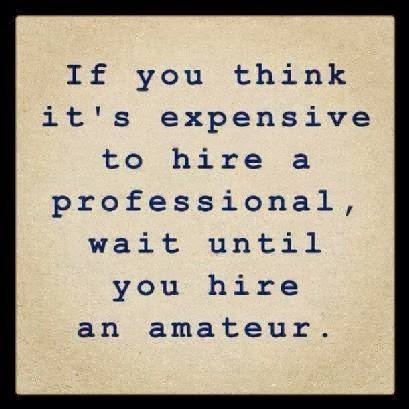
At its worst traditional Advisers expect to charge a premium for this advice and yet they have never walked in the shoes of those they seek to influence. They have never led a business, never risked all as an entrepreneur and they don’t have the scars, stories and lessons learnt from experiencing failure, success and from practical application. They are not people leaders and yet they seek to advise, develop & influence leaders who are.
Worse still they don’t typically ask their clients for any feedback nor ensure that what they are doing is effective & of value value. They struggle with practical application of theory & struggle to get clients to execute their advice. Often there is constant muttering & frustration as to why this happens.
I personally have worked with many professional services companies who openly state they are client centric and yet they seek no client feedback. Their fees are dropping so they finally forced to react and seek change.
In one case it had been 12 years since a company had completed any feedback survey of their clients. Think about the arrogance of that. They assume they know what it is their clients need but never go beyond individual opinions.
When surveys are finally deployed they discover to their horror that their current reality does not match their assumptions and that they have a huge training, R & D and leadership development gap to close. Too complacent and comfortable to really care about their clients needs.
Many times I have challenged an absurd desire to spend time refocussing on their client relationships prior to measuring client loyalty or engagement because they fear the results.
Business Advisors of the future must;
- Be experienced leaders who lead by example with their own Business practices and actively see themselves as leaders and influencers. Advisors who make things happen, can influence people through real stories of practical application and who can coach, mentor and guide other clever people. They must have people skills (EQ) and empathy.
- Own the voice of their customer. They must have an up to date (& data based) understanding of what their customers really want and need. In fact the top advisers are pro-active and bring solutions to their customers before they know they need them. They anticipate needs rather than react to immediate situations.
- Have humility and respect always.
- Be future focussed and have a passion for lifelong learning. If you are as good as you will ever be it’s just not going to cut it. Academic qualifications are table stakes and the start point not the end game. They must provide clarity and inspire confidence for those they serve by constantly up skilling and learning.
- Bring researched frameworks & networks of like minded people. The day of the individual guru with all the answers is gone. Business today is simply too complex to know everything. The best Advisors will connect customers to other leaders, professional advisors and collaboratively bring unique solutions to complex problems.
- Measure and manage & clearly demonstrate massive value. This will not always be financially driven either, rather it will vary from customer to customer.
So thats why we do what we do. These are but some of the reasons we are on a mission to disrupt Business Advisory. Business leaders expect and need more and this is not opinion….. we ask them regularly and have done for many years.
The Pivot: Staying at the Top of Your Game
How do the top performing teams in the world stay at the top of their game? Sports teams, racing teams, leading brands, innovative teams, military teams and many others? What do leaders at the top of their game do to stay at the top? What does this mean for business?

Right now things in business are going pretty well. There is uncertainty in the medium and longer term as to what is going to happen in money markets, commodity markets, the Chinese/US or EU economies. There is a lot of technology disruption starting to show up on the fringes of even the least tech savvy industries. Change is coming and whether it is disruption, a softening economy, a total global meltdown or even a major political event we will all need to navigate it.
The RESULTS Group work with good companies and proactive leaders who want to get better at what they do. Our clients tend to be the long term brands that over decades have performed exceptionally well. They are actively seeking to stay at the top of their game.
In the next 5-10 years all of us leading (me included) are going to face more change than the world has seen in the last century. It will be fast, ongoing and relentless and will be an exciting and challenging time to lead. Some commentators say we are in year 2 of a 35 year technology disruption. How true is this and how will it affect our own business is open to interpretation but we are all starting to see the wave of change.
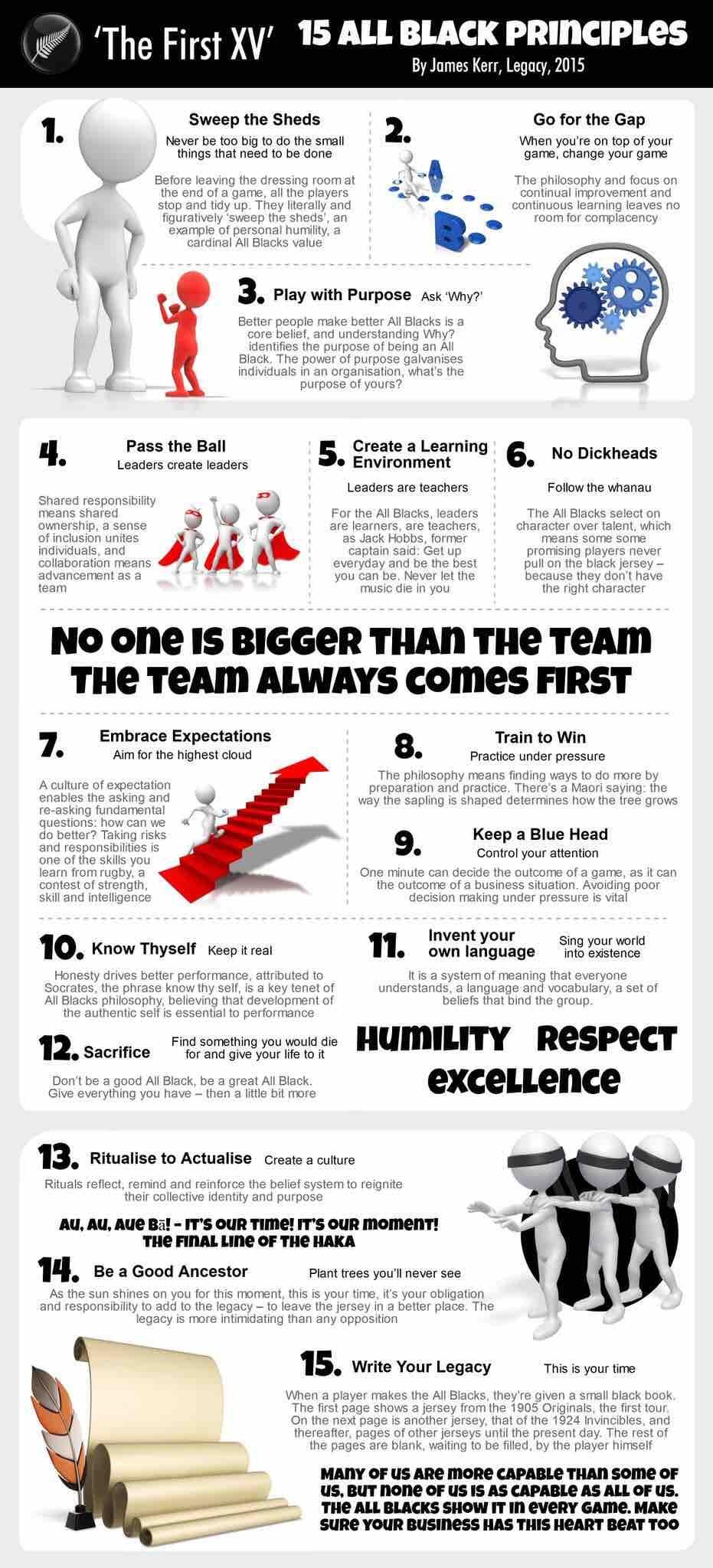
To stay at the top in any professional environment there is a need to develop a culture of continuous learning. If we look at the All Blacks (the most successful global high performance professional sports team/brand with a winning record of 86%, two back to back world cups & recently voted the best team in the world across all codes). In James Kerr’s book “Legacy: What the All Blacks can teach us about the business of life” you will see Chapter 2 is entitled “Adapt”. In essence the commentary is all around “When you are at the top of your game, change your game.” This is about changing consciously before you need to, in order to stay ahead of the competition and to remain the best of the best. To keep an edge or a sustainable point of difference.
I like to refer to the term “pivoting”. I saw this in action during some work I recently did at the University of Florida, assessing entrepreneurial engineering teams and the projects they were completing for private business. They were presenting what they had achieved and were seeking feedback so they could iterate and improve their project. They were seeking a “pivot” through good insights and application of ideas.
The best leaders and companies we work with are already pivoting at a time when they are performing well. They know through experience that the good times won’t last. To stay ahead of their competition and to navigate change they must understand what success continues to look like. How do they do this?
Those CEO’s proactively keeping ahead of the crowd prioritise the following;
- They invest in their own development and leadership skills so they can lead smart innovative people in a collaborative way.
- They spend time in strategic and operational planning with their teams, senior leadership teams and functional teams. They continuously define the priorities and focus of action.
- Actively build an aligned plan to execute continuous change and constantly reflect on it, revise it and iterate it to make it better. They empower their people to lead parts for the execution.
- Focus on execution and getting the important things done.
- Seek the best advice on technology disruption, the economy, competitors, new entrants and possible substitute products and services.
- Stay very close to their clients and know what they value, expect and want improved. They build collaborative and close relationships through many channels including social media.
- Invest in leadership development (and education) and focus on increasing staff engagement to build resilience and an ownership mentality. This aids the change process and brings innovative and collaborative thinking to the fore.
- Focus on the numbers. What gets measured can be managed.
- Actively disrupt the companies “business as usual” in a positive way so as to build capacity and capability in a continuous way. This allows the organisation and the team to scale up in a long term sustainable way.
- Make the tough decisions early.
- Learn the lessons of previous economic downturns and change projects so as to ensure the same mistakes are not made again, and
- Recognise success and continue to have fun along the journey.
This all sounds simple (and it is) but it is not easy. It takes focus, good strong proactive leaders committed to ensuring the important things happen and not just the urgent things of modern business. It is about going beyond reactive firefighting and consciously picking & executing the plan for/route to success.
Staying at the top of your game is about changing before you are forced to change. This means having a good team committed to getting incrementally better at what they do.
It is about confidence and momentum.
Just start the journey.
 Leading from the front