Leadership is a key predictor of success and the impact leaders have on a group is not only significant but extremely consistent. Leadership is a “Group resource” and groups that are seeking to get ahead tend to want to have the best leaders in place to ensure that outcome. Personality plays a big part and I am often asked questions such as “Are leaders born or made”, “Do leaders have to be charismatic and inspiring to be successful.”
This video from Hogan Assessments is a very good resource and it answers many interesting questions as it explores the science behind personality and the impact this has on leaders. We use Hogan Assessments to support clients on our Executive Leadership Program and really value their research and expertise.
About this time every year for the last four years I have sent out a two question survey to over 200 CEO’s. These are senior leaders not only in my own network but across all of our consultants networks also. This year (as he did last year) our business partner John Spence also sent the survey through his US & global network of US based Chief Executives and business experts.
The results of this survey are a barometer of how senior business leaders are feeling & what they are facing in todays dynamic business environment. As you can imagine a huge amount of information was provided and it took some time to distil the information & to identify the patterns. Here are the results of this years survey;
Question 1: What were the three biggest leadership lessons you learnt in 2016?
Change is constant & becoming even more so. This has increased the need to make faster decisions & to effect change faster. An interesting pattern was that some felt that resistance to change within their company can actually be due to ambiguity i.e. the lack of clarity on what needs to change which can result in people resisting the change.
The culture of the company is a critical success factor. Many felt there was a need to act fast to preserve the culture, there was a need to have a culture of high trust between those in the team. It was important to attract & retain people who fit the culture of the company on the team. A culture of coaching & teaching team members to get better in their role was an emerging trend.
Effective communication is critical to success. It needs to be clear & simple. Issues arising need to be confronted with urgency.
Question 2: What are the three biggest challenges you will face in 2017?
Leading in continuing change and managing the tempo/pace of this change. Leading “culture” change as companies look to change how they do things. The challenge of proactively staying ahead of change rather than being reactive to it.
Staying profitable whilst navigating the uncertainty created by ongoing change, global influences, political uncertainty and the impact of global markets.
Understanding what clients really need. Understanding the opportunities in the market. The challenge of standing out as a brand and getting cut through with important marketing messages.
As you can see there are some big themes around the challenge of leading in ongoing change & the impact this has on culture and profitability. Without question the modern CEO is a change leader and this will be a continuing trend as disruption and complexity increases over the coming years.
Those leaders who are constantly up skilling themselves, keeping abreast of the emerging technology, building resilient leaders within their company will be able execute and thrive in the future. Those who fail to adapt fast enough will not do as well, if they survive at all.
You can look back on last years results (and previous years) to compare trends by clicking this link.
It has been a busy and exciting year to lead in business and there will be no shortage of challenge in 2017. I write this in Atlanta as I wait for my return flight to New Zealand having just spent some time working with clients in Florida and New York. The world is now a very complex & connected place – connected by technology, systems, relationships and markets.
The role of a leader is to lead change with certainty and we look forward to continuing to support our clients as their Strategic Execution Partners as they seek to simplify their business.
I am lucky enough to guest lecture at the University of Canterbury at the School of Business and Law. Supporting Masters level and MBA students with access to real life business opportunities and thinking is something I am passionate about. In July I introduced my good friend John Spence (Find out more about Top 100 Business Thought Leader John Spence here) to UC to speak about “Leading in Constant Change”. Here is his presentation.
Leading NZ soldiers is an incredible challenge, responsibility and privilege.
Much of my working life has been spent as an Army Officer, initially as a regular and later in the Reserves. I have found that the skills I learned and applied leading soldiers are very relevant and transferable for leading teams and driving business execution; especially in this increasingly dynamic and ever changing marketplace.
As you can imagine, the challenge of leading men and women who are working in dangerous roles in challenging environments requires a high level of trust, empathy and teamwork.
The Army places great emphasis on leadership skills and invests heavily in leadership training and development at all levels. Training courses to enhance leadership skills continue right through to those at the very highest ranks of the Army.
Here are six key things that the Army teaches their leaders in order to “fight to win”:
1. Remain calm under fire.
That’s not to say that fear is not present, in fact it is. However, to “keep calm and carry on” regardless of the situation is something you can learn. It is the golden rule for keeping your head and working through a logical process in order to respond to a hostile or changing situation. Being calm and thinking clearly are essential requirements to evaluate what is happening and to make effective decisions.
2. Any plan is better than no plan.
Without a plan you cannot inspire others to follow you. Having a plan is the starting point for successful execution. Even if the plan is not the right one, making a decision and creating a plan will save lives and generate positive activity. A good team will back itself to quickly adjust a plan so that it is effective.
3. No plan survives the start line.
The Army recognizes that in every situation there is another party that can influence the situation. Not just the enemy, but terrain, equipment, weather, civilian populations, and even animals can influence a plan. All the various scenarios that might happen should be considered and planned for so that the plan can be quickly adjusted if required. The fact a team has planned and engaged together allows it to quickly iterate the plan as needed.
4. Maintain momentum.
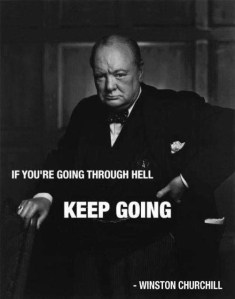
In any situation there needs to be swift action, and momentum needs to be maintained to ensure successful execution. Slowing or stopping any operation means it is difficult to get going again. It reminds me of the saying “When going through hell….keep going!”
5. Teamwork is a defining factor.
A group working together and supporting each other to achieve the defined goal will greatly lift the chance of success. Training together, working together, getting to know one another, and building trust all help to build teamwork. Good teams keep going when the going gets tough, and they overcome blockages in order to win.
6. Time is seldom wasted in planning or recon.
Taking the time as a leadership team to plan ahead for future operations, alternative scenarios, routes to be taken, areas of interest, and likely courses of action is seldom wasted. Planning and reconnaissance actually saves time, saves resources, and in many cases, people’s lives.
There are many situations in business where these skills can be applied. Strategic thinking, strategic planning, working together to build teamwork and trust, as well as incorporating a planning cadence that allows a business to quickly alter a plan and then change direction as required – are things a smart business leader does.
Influencing and inspiring people gets stuff done. That’s called “business execution” and by applying these six lessons from the Army you too can inspire your team to “fight to win.”
How do the top performing teams in the world stay at the top of their game? Sports teams, racing teams, leading brands, innovative teams, military teams and many others? What do leaders at the top of their game do to stay at the top? What does this mean for business?
The best teams change before change is needed. They pivot and iterate to stay ahead of the crowd.
Right now things in business are going pretty well. There is uncertainty in the medium and longer term as to what is going to happen in money markets, commodity markets, the Chinese/US or EU economies. There is a lot of technology disruption starting to show up on the fringes of even the least tech savvy industries. Change is coming and whether it is disruption, a softening economy, a total global meltdown or even a major political event we will all need to navigate it.
The RESULTS Group work with good companies and proactive leaders who want to get better at what they do. Our clients tend to be the long term brands that over decades have performed exceptionally well. They are actively seeking to stay at the top of their game.
In the next 5-10 years all of us leading (me included) are going to face more change than the world has seen in the last century. It will be fast, ongoing and relentless and will be an exciting and challenging time to lead. Some commentators say we are in year 2 of a 35 year technology disruption. How true is this and how will it affect our own business is open to interpretation but we are all starting to see the wave of change.
To stay at the top in any professional environment there is a need to develop a culture of continuous learning. If we look at the All Blacks (the most successful global high performance professional sports team/brand with a winning record of 86%, two back to back world cups & recently voted the best team in the world across all codes). In James Kerr’s book “Legacy: What the All Blacks can teach us about the business of life” you will see Chapter 2 is entitled “Adapt”. In essence the commentary is all around “When you are at the top of your game, change your game.” This is about changing consciously before you need to, in order to stay ahead of the competition and to remain the best of the best. To keep an edge or a sustainable point of difference.
A summary picture of the key chapters & topics of the book “Legacy” by James Kerr.
I like to refer to the term “pivoting”. I saw this in action during some work I recently did at the University of Florida, assessing entrepreneurial engineering teams and the projects they were completing for private business. They were presenting what they had achieved and were seeking feedback so they could iterate and improve their project. They were seeking a “pivot” through good insights and application of ideas.
The best leaders and companies we work with are already pivoting at a time when they are performing well. They know through experience that the good times won’t last. To stay ahead of their competition and to navigate change they must understand what success continues to look like. How do they do this?
Those CEO’s proactively keeping ahead of the crowd prioritise the following;
They invest in their own development and leadership skills so they can lead smart innovative people in a collaborative way.
They spend time in strategic and operational planning with their teams, senior leadership teams and functional teams. They continuously define the priorities and focus of action.
Actively build an aligned plan to execute continuous change and constantly reflect on it, revise it and iterate it to make it better. They empower their people to lead parts for the execution.
Focus on execution and getting the important things done.
Seek the best advice on technology disruption, the economy, competitors, new entrants and possible substitute products and services.
Stay very close to their clients and know what they value, expect and want improved. They build collaborative and close relationships through many channels including social media.
Invest in leadership development (and education) and focus on increasing staff engagement to build resilience and an ownership mentality. This aids the change process and brings innovative and collaborative thinking to the fore.
Focus on the numbers. What gets measured can be managed.
Actively disrupt the companies “business as usual” in a positive way so as to build capacity and capability in a continuous way. This allows the organisation and the team to scale up in a long term sustainable way.
Make the tough decisions early.
Learn the lessons of previous economic downturns and change projects so as to ensure the same mistakes are not made again, and
Recognise success and continue to have fun along the journey.
This all sounds simple (and it is) but it is not easy. It takes focus, good strong proactive leaders committed to ensuring the important things happen and not just the urgent things of modern business. It is about going beyond reactive firefighting and consciously picking & executing the plan for/route to success.
Staying at the top of your game is about changing before you are forced to change. This means having a good team committed to getting incrementally better at what they do.
The definition of insanity – Doing the same thing over and over again and expecting a different result.
There is a lot of research that shows the best lessons are learnt through experience and from failure. Failures can be big and small ranging. One of the leaders I admire is Winston Churchill. I have read so much of his writing and the various biographies and speeches. He had some of the most fantastic failures and also some biggest successes. His early years were a disaster and yet he went on to lead Britain and the Commonwealth to victory over Germany in the second world war. He adapted, reflected and used what he had learnt and the resulting resilience he built.
When going through hell keep going!!
Most long serving Business Owners and CEO’s have made some big mistakes over their career. Economic changes, currency fluctuations, competitor moves, technology changes have taken most close to the brink at some stage and we add to that the complexity of some bad decisions, no decisions or not changing fast enough. In fact some would say if you haven’t pushed things a bit then you are not even close to peak performance.
The ability to see mistakes early comes from that skill of being able to reflect. As a leader at any level you need to consciously build on that “gut feel” to really understand and reflect on what you are seeing; in the work place, after a meeting, in a project review, after a client discussion, during a Strategic Execution review etc. So often the skills a high performing senior leader seeks to intentionally develop is that ability to self reflect, to be able to change a bad situation, a failing plan or iterate on an initial decision. To be able to understand the impact he or she is having, needs to have and who/what needs to be influenced to achieve success. This allows a Company to move faster and to build on performance.
The ability to understand and interpret (make a professional judgement) what you are seeing, validate it by seeking feedback in many ways and to constantly learn lessons is a very valuable skill. It is especially challenging when it is “cultural/the people” stuff we are needing to interpret especially to support change. I enjoy coaching these skills and you never stop learning from others.
So some of the best leaders also have the best battle scars and the best stories to tell about the lessons they have learnt. They have adapted and overcome big challenges. The ability to tell the story, to reflect on what happened and why and how they have applied the lessons they have learnt is where the true gold lies. In fact the CEO Leadership Round Table Groups I chair in Auckland and Christchurch are based around current Executive leaders telling their personal leadership journey and generating discussion around their reflections.
In fact having to speak about your personal journey forces a significant amount of self reflection as you articulate who you are (background & history) and why you have taken the journey you have as a leader. The lessons learnt and the things they got wrong are where the gold is and it gives us the personal connection and insights.
Try writing your own story.
If you need some inspiration consider being a guest at one of our Business Round Table Breakfasts and hear some great stories.
What were the biggest Leadership Lessons you learnt in 2015 (and/or leadership observations you have made)?
What are the biggest challenges you feel you will face in 2016?
This survey also took in to account the responses from 104 New Zealand CEO’s conducted for The RESULTS Group by an independent research company (Per.ceptive Research).
It is fair to say that surveying over 200 CEO’s (in many varied industries) across New Zealand (mainly), Australia and the USA meant I received a huge amount of feedback. It was a challenge to consolidate this feedback, despite there being some clear common themes. Here are the results.
Question 1: What were the 3 biggest Leadership Lessons you learnt in 2015 (and/or leadership observations you have made)?
“The importance of company culture and just how difficult it has been to lead both change and people (to change).” Change has been constant especially with technology disruption in many industries. Understanding what needs to change and then to actually get people try different things or new ways, new systems & processes has been really challenging. The quality of people in the team, their skills and the ability to actually get things done has often been the main point of differentiation over competitors.
“Establishing the Accountability within your people to get things done/to take action.” There has been more focus & need to have clear KPI’s and measurements in place so as to lift engagement and accountability within Companies. Taking action, executing and making things happen is increasingly important in an environment of constant change. To try new things, fail fast, adapt or simply just to do what has been agreed to is critical. The challenge of holding people to account, measuring and managing has increasingly been seen as vital in business in 2015.
“Being able to change fast enough whilst keeping it simple.” It has been increasingly harder to keep things simple and to identify & focus on doing the important things. Saying “no” to opportunities, constantly trying to keep things from becoming extremely complex has been a real challenge in a world that tends to expect you to do more and more. “Busyness” is the new plaque and separating the important from the urgent has become ever harder to achieve.
Question 2: What are the three biggest Leadership Challenges you think you face will in 2016?
“Remaining profitable through Growth.” We all know growth sucks cash and typically businesses are under capitalised. Often the main measure of Business success is profitability and it is widely felt it will be increasingly harder to deliver profits as change increases, profitability shrinks and as businesses grow.
“Developing future leaders and motivating good people.” Succession is increasingly looming on many company radars. Developing future leaders to take the business forward, to be able to sell the business, to step up as current leaders step back are all challenges many see in 2016. Motivating and engaging good people to stay longer term & to set the business up for future success are skills CEO’s are seeking and actively looking to invest in.
“The increasing pace of Change in the Market place & the ability to adapt.” It is perceived that there will be more change in 2016 & it is increasing. The ability to adapt to change, embrace new technology tools and compete is seen as becoming more of a challenge for CEO’s to remain profitable and to grow. Developing new products &/or services quickly enough to meet the market and client expectations are key challenges identified.
Every year in business is a different one that brings a mix of the ongoing leadership challenges along with many new ones. Certainly change is now a constant and that pace of change is really starting to pick up. The impact of new technologies in communication, automation, artificial intelligence, online applications and tools & social media are changing things fast. In fact much commentary is suggesting we will face more business change in the next 5-10 years than we have in the last 100.
One thing that does not, and will not change is fact that every Company (and indeed group of people) needs a leader. In fact research shows we all want to be led in some way, shape or form. The importance of a leader and his/her ability to inspire, coach, mentor & influence good people to get important things done in an environment (culture) they enjoy is often the main (sometimes the only) point of differentiation a company can have over competitors in increasingly crowded markets.
Strong leadership & excellent change leadership skills are increasingly the most important skills that will define a businesses chances of long term success. During 2015 our Executive Leadership Program has become the fastest growing part of our Business as we seek to support CEO’s to lead change, achieve sustainable growth and to support them to prepare for sale, economic downturn or industry disruption. More than ever high performance business leaders need & seek good practical smart advice, support, facilitated planning, time out and an unwavering positive outlook to navigate the challenges 2016 will bring.
What are you planning to intentionally do differently to lead Business Success in 2016?
You can link here to the CEO blog summary doc which shows the comparable results of all 3 surveys.
This year has been a very busy and professionally rewarding year. As a Company The RESULTS Group has grown and moved into a different area. Our core business as “The Business Execution Experts” has remained the same and we have proven our “5 Pillars” framework (Vision, Strategy, Engagement, Accountability and Cadence) across every industry and every sized company imaginable. Ranging from the small 20 person company, the family held medium sized company through to larger NZ & foreign listed Companies, Government organisations and into several big organisations with a Billion or more in revenue. From the straight forward to the incredibly complex, from construction to the professional services (law, accountancy, survey, HR, Banking) to the technical world of IT and fast growth IP.
Ambiguity leads to mediocrity but then so too does continually benchmarking and being realistic.
Our consultants have been challenged and pushed as they have focussed on our purpose of “Making a Difference” and ensuring our clients get the clarity so they they can execute their plans and lead change. It has been a year of change for us as a company and we have truly lived our core value “Live What we Teach” as we have sought to execute our own plan in amongst the busyness that “Business as Usual” presents. We have had to challenge ourselves to focus on the important rather than just the urgent which is the constant challenge of every CEO. So what have been my big lessons across 2014 as a Consultant, Executive Leadership Coach and professional CEO? I keep a journal reflect on the work I do and what I have learnt most days which makes it easy to look back and to reflect on the important stuff over the year. In no particular order;
Better, faster, cheaper: These are most common approaches that Companies have. These are not Strategies. Own the voice of your customer and look after them. Ask them often for feedback and listen to it. The magic will start.
Hope is also not a Strategy. You have to be deliberate and decisive in order to avoid being a victim of the market or dealt to by competitor moves.
A CEO adds at least 15% to the bottom line. (Research shared by Psychologist Dave Winsborough) by being inspirational, creating culture, expectations, a Vision and driving execution. The impact of good leadership is huge and measureable.
The number of senior leaders seeking to leave Corporates and the Public sector so they can have autonomy and so they can actually make a tangible difference is truly staggering! A sense of purpose is critically important to people.
A lot can happen in a year. Good & bad. Roll your sleeves up and make good stuff happen.
CEO’s are often afraid to be human. The soft skills, the least talked about and trained for are the most important ones. Being able to be vulnerable, to make mistakes and learn from them……so important for leaders and so often missing.
Making clear and concise powerful decisions is often a missing skill. Making good decisions based on the best information at the time and backing yourself to alter them if they need it is a really critical skill especially in times of constant change. Just make a decision!
The value of having a massive network of people who you can support, ask for advice, learn from and add value to is truly priceless. I have so many people who support and contribute to our business and it is humbling to be able to support them in their roles and in their companies.
Any leader needs many mentors. Business and personal to grow in the complex world of modern business.
Formalising network Hubs or groups of people who can give you ongoing referrals and support is of high value.
John Spence taught me “you become like the 5 people you hang out with the most” Choose them carefully.
Hang out with those who know and ask a lot of questions. Learn from people with experience and acumen.
Lead from the front. Just lead and learn. People want to be led well. Make it a passion and never stop getting better at it.
As a CEO you need to make the big things happen. Get the rocks or cornerstones in place and make the things happen that move the Company in that direction happen. This is what CEO’s do.
Don’t seek to change people, seek to influence their activity, their behaviour and how they make their decisions. Seek to create an environment whereby they make consistently good decisions.
The art of reflecting and making clear observations and to be able to take an overview of the situation allows for better clarity. Practice it or have your team challenge you to do it.
Be tough. Firm, fair and consistent, but be tough in your standards and expectations of people. Be restless, seek excellence and constantly ask “Have I done enough?”. If the answer is no then step up and do more. Be the toughest on yourself……with power comes great responsibility.
Culture is king and Cash. No one can steal your culture. In fact thought leaders such as Tom Peters, Collin Powell, Richard Branson and John Spence all say that your culture is really your only truly defendable and significant point of difference. No one can steal it and if you get it right it will attract and retain top talent who in turn will look after your products, services and deliver excellent service to your clients. get that right and the magic begins!
Sadly in most companies the culture is just adhoc. No one plans it, discusses it and if they get it right it is by getting lucky. The best cultures in high performing companies are planned, a priority and protected by selecting only the best and by dealing with mediocrity very quickly. Leaving your company culture to luck means you are leaving a critical component of your “mission” success to chance.
Planning the year ahead in detail on a year planner (Sounds basic but try it) remains one of the activities that CEO’s rate as “most valuable”. Map out key dates, board meetings, reviews, training, holidays etc and plan the year ahead. Insist your team plans and gets clear around the year ahead.
Meetings are your number one leadership opportunity. Make them high value, fast, refer to good data/KPI’s and have fun. Most meetings in business today sap the energy from those who attend. Flip that around because leaders do people, leaders communicate and meetings are your number one opportunity to influence and live your culture.
Have more fun. Enjoy the ride. Its not a rehearsal.
Its been a big year and I have loved every minute of it. I’d like to thank my team and our awesome clients for everything. I can’t wait to be a part of the work we do in 2015 and all the challenge, fun and learning it will bring.






 Leading from the front