The future of Governance

Governance is an important component of any business. All companies have directors but not all place an emphasis on its importance nor the value it can add. It is a key part of succession (allowing owners the transition or sell), accessing external funding, maximising value to shareholders and reduces business risk as the organisation navigates change or challenge. On top of that it supports talented CEO’s to thrive and reach their potential.

The Fog of (War) Business

Out of Chaos comes Clarity

On the battle field the fog of war refers to the fact that it can be very hard to see the full picture of what is happening let alone how you are progressing your part of it. Smoke, dust, noise, reactions of the enemy, weather, other friendly forces in the area all contribute to a situation that can be hard to navigate, easy for clear communication to fail & difficult to make clear decisions amongst.

So too in the current business environment. How do you as a leader get the clarity and confidence needed to make good solid decisions when the future seems full of uncertainty, technology change, economic disruption, challenged supply chains and changes that require rapid responses?

A few proven big ideas to consider;

  1. Invest in your team. Continually building trust, close relationships and digging deeper in the “self” awareness and “other” awareness space builds support and empathy. Teams who have each others back can have robust discussions, align and then roll their sleeves up and get the mahi (work) done. Now is a very good time to invest in your team collectively and individually. Little bits regularly on an ongoing basis creates confidence and helps with alignment & effective communication.
  2. Bring the outside in. It can be too easy to be inwardly focussed within your own business and this increases your risk profile. Share insights, information and seek to understand the bigger picture across the market. By taking a much broader approach it will allow you to make better informed and timely decisions. Engage broadly with trusted advisers, collaborate with like minded professionals & constantly ask your clients for feedback. There has never been more collaboration between organisations including competitors.
  3. Schedule and prioritise regular reviews, strategic updates and industry scans. If things are moving fast increase your meeting rhythm. This means scheduling more reviews (not less) and opportunities to pause, take stock of the situation, make clear decisions, review previous decisions and execute change in an aligned and coordinated way. It can be too easy to cancel these important reviews and become consumed by immediate challenges. Sadly this creates confusion, increases the workload, levels of frustration and chaos. Plan, plan and plan.
  4. Make good clear decisions with the best data and information available but be prepared to adapt and iterate the plan as things change. It is important to execute through a series of reviews and decision points. Data wins arguments and moves a discussion away from strong opinions so it is always worth looking at the key numbers and the patterns that are emerging.
  5. Bank the valuable lessons learnt. Reflect regularly on what is working, what isn’t and ensure the same mistakes are not made time and time again. Success breeds more success and confidence.
  6. Take regular breaks, have fun and celebrate the wins. Keep across your team and ensure they take time out, look after their family and recharge. This period of change will be ongoing and a marathon (rather than a sprint). Teams who make it a priority to celebrate the key wins regularly have a sense that hard work is paying dividends. It is just as important to acknowledge what is going right than to constantly focus on what isn’t. Celebrations don’t have to be huge in fact most don’t need anything more than setting aside some time to acknowledge people and achievements.
  7. Ask for Help. Seek help from those in your team, your mentors, coaches, members of your board, others in your peer group. You don’t need to know & in fact can’t have all the answers, rather seek to build a network around you from whom you can seek expertise, experience and information.

Without a doubt the current environment an exciting time to be leading in business. As professional leaders we owe it to those within our team, company and their wider families to be at the top of our game. The fog of (war) business can be challenging and even overwhelming at times and we can all learn from how others approach it.

How are you leading in times of uncertainty?

University of Canterbury: Leading in Constant Change

I am lucky enough to guest lecture at the University of Canterbury at the School of Business and Law. Supporting Masters level and MBA students with access to real life business opportunities and thinking is something I am passionate about. In July I introduced my good friend John Spence (Find out more about Top 100 Business Thought Leader John Spence here) to UC to speak about “Leading in Constant Change”. Here is his presentation.

https://www.youtube.com/watch?v=fJw-fblTfuY

My Memories of 20 Feb 11: Ground zero post the Christchurch Earthquake

20 February 2011 (5 years ago) at just after 1pm was one that shook is all, a major earthquake. Our office building evacuated & we headed for home. That in itself was going to be challenge with a full central city evacuation under way & bridges out. Short Texts came through to tell me my immediate family were alive & safe. My brothers house was hit by rocks I knew & Dad was in it…..but just how bad things were was to later be a bit of a shock.

I had left the Army in 2004 but was in the throes of rejoining the Army Reserve.

183120_10150109284772297_3400567_n
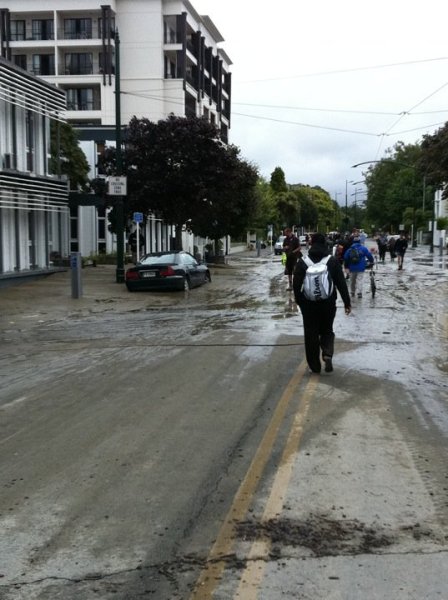
Central CHCH 1.46pm 20 Feb 11

A call from the XO of the Battalion (the only one to come through in a jammed cell network) redirected me to Army duty. I parked my car and proceeded from Sydenham to the city centre. In my office attire I walked through liquefaction and what was a scene out of a movie. It was 1.30pm.

I walked past a building lying across a lane of Montreal st, stopped to hug a distraught older woman with half a hair dye and foils in. Distraught from watching a bus get crushed she was walking to Oxford 50km away crying.

I overheard builders discussing how they should secure their high rise site and get home.

My task from the Army was to find the Mayor, provide the NZ Defence emergency cell numbers and to proceed to the Civil Defence bunker on Kilmore st. Later I was to discover my wife’s bravery in getting Caetana from school amongst collapsing cliffs and then helping Dad who was trapped in my brothers house that was destroyed by rocks.

The mayors staff had been evacuated after an aftershock from the new gallery building. I passed on the info to Bob Parker & his Ops Manager, gathered a couple of soldiers who were there looking to help and pushed on to find the civil defence bunker, my next task was to fill in as a situation/operations officer until a regular Infantry officer could get in from Burnham. Little did I know it would take many hours for him to arrive.

My first job back in Army service for 7 years.

The bunker was hard to find in the chaos, I passed through the emergency aid station in Cramner square and through many police check points.

In the bunker I found my old Army boss, Baden Ewart in command. Baden was working in the medical world and was stepping up given that the civil defence staff were in Wellington the day of the quake.

I sat in on the briefing of the current situation and it was apparent that a lot of people were hurt and killed. Early sky TV reports showed the CTV and PGG building collapses and I could hear the fire and police radio traffic spelling out the terrible challenges they faced.

Andrew Howe was the ops officer (an ex army friend and colleague). I was put in an office with the fire liaison officer. All the Army assets were in Timaru in preparation for a large defence exercise and by chance HMNZS Canterbury had docked at Lyttelton minutes prior to the big quake. It was full of armoured and military vehicles and soldiers that would help.

179868_10150109274772297_7016067_n
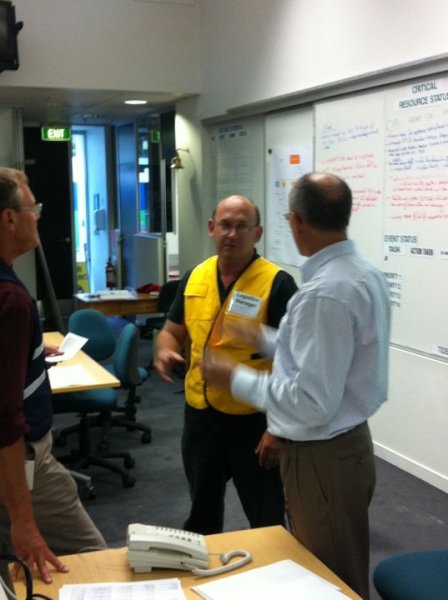
The Civil Defence Bunker, 20 Feb 11. Andrew Howe and others discuss the situation, approx 4pm

My role was to link between the civil defence command post and the Army command post in Burnham and to support military flights bringing high risk search teams, generators, water treatment units and medical assets into the city. We were coordinating fuel and power for the fire and police services to keep operating and prioritising transport heavy lift and military communications assets.

40 mins into it someone came into the command post and announced that it looked like the Copthorne Hotel might collapse on the bunker. With ongoing large aftershocks hammering the city it was possible although a bit dramatic I thought. Baden said “Langston go out and check that”. So out I went and looked at a 12 story building leaning over and definitely looking like a potential collapse.

My report ” I’m no engineer Baden but it’s not looking flash”. Someone did mention that the bunker was designed to withstand a building collapsing on it but then who would dig us out. WTF?

And so through the shock and chaos a lot of good people worked to make sense of it and to make a difference.

At a little after 7pm I was relieved by an Infantry Captain (he had to park in Riccarton and find the bunker) and walked the 7km around the cordon to my car in Sydenham. A full cordon was in place and with no ID the police made me go the long way through the park and around the 4 avenues. Our office was in the cordon (for 6 weeks) and I arrived at my car covered in mud.

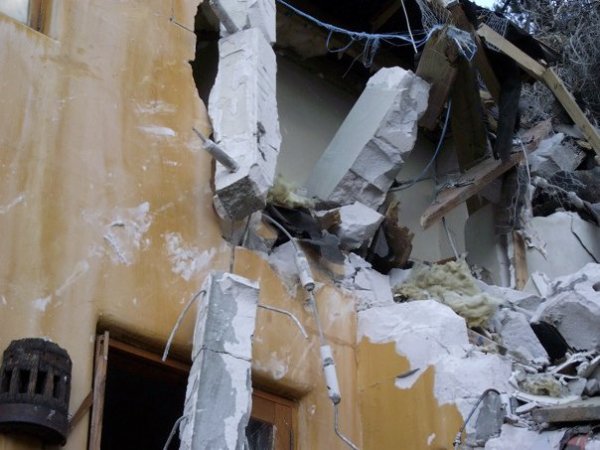
My trip home to Sumner paused at my brothers place where I surveyed the damage, the rocks on his house, the tunnel my dad escaped the 2nd floor from and the boat that had caught fire. Ed was smiling but shaken. My family had tents on the lawn and Dad was quite badly shocked after his experience. We settled into a night of aftershocks, sleeping on the lounger floor and the start of months without water, sewerage or power.

199725_10150155694357297_1789585_n
My brothers house suffering rock damage. My father was lucky to escape unhurt.

I will always remember that day, just how surreal it all was and the part we all played in a difficult situation and uncertain environment.

It was a fitting baptism back into our Army and Months later I received an unexpected letter of commendation from the Brigade commander thanking me for my work that day. Many people did what needed to be done and I was proud to play a small part for the NZ Army.

I never did get around to claiming that first day of army pay (it didn’t seem right) but it was worth it for the adventure & I’ll chalk it up as a donation!

……. And so we remember.

Some of my pictures of that day are attached. We were one of the lucky families that all survived although we were all affected by those who did not.

The Power of “Lessons Learnt” & “Reflection”

unnamed
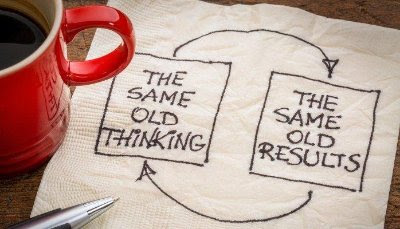
The definition of insanity – Doing the same thing over and over again and expecting a different result.

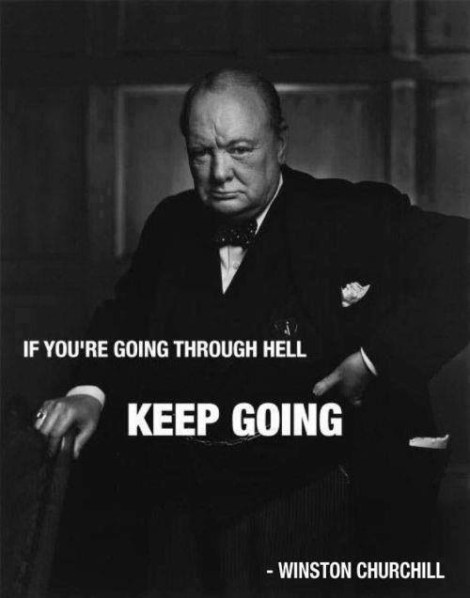
There is a lot of research that shows the best lessons are learnt through experience and from failure. Failures can be big and small ranging. One of the leaders I admire is Winston Churchill. I have read so much of his writing and the various biographies and speeches. He had some of the most fantastic failures and also some biggest successes. His early years were a disaster and yet he went on to lead Britain and the Commonwealth to victory over Germany in the second world war. He adapted, reflected and used what he had learnt and the resulting resilience he built.

Hell
When going through hell keep going!!

Most long serving Business Owners and CEO’s have made some big mistakes over their career. Economic changes, currency fluctuations, competitor moves, technology changes have taken most close to the brink at some stage and we add to that the complexity of some bad decisions, no decisions or not changing fast enough. In fact some would say if you haven’t pushed things a bit then you are not even close to peak performance.

The ability to see mistakes early comes from that skill of being able to reflect. As a leader at any level you need to consciously build on that “gut feel” to really understand and reflect on what you are seeing; in the work place, after a meeting, in a project review, after a client discussion, during a Strategic Execution review etc. So often the skills a high performing senior leader seeks to intentionally develop is that ability to self reflect, to be able to change a bad situation, a failing plan or iterate on an initial decision. To be able to understand the impact he or she is having, needs to have and who/what needs to be influenced to achieve success. This allows a Company to move faster and to build on performance.

The ability to understand and interpret (make a professional judgement) what you are seeing, validate it by seeking feedback in many ways and to constantly learn lessons is a very valuable skill. It is especially challenging when it is “cultural/the people” stuff we are needing to interpret especially to support change. I enjoy coaching these skills and you never stop learning from others.

So some of the best leaders also have the best battle scars and the best stories to tell about the lessons they have learnt. They have adapted and overcome big challenges. The ability to tell the story, to reflect on what happened and why and how they have applied the lessons they have learnt is where the true gold lies. In fact the CEO Leadership Round Table Groups I chair in Auckland and Christchurch are based around current Executive leaders telling their personal leadership journey and generating discussion around their reflections.

In fact having to speak about your personal journey forces a significant amount of self reflection as you articulate who you are (background & history) and why you have taken the journey you have as a leader. The lessons learnt and the things they got wrong are where the gold is and it gives us the personal connection and insights.

Try writing your own story.

If you need some inspiration consider being a guest at one of our Business Round Table Breakfasts and hear some great stories.


Leadership Lessons: The 7 Big Leadership Lessons learnt in 2013

I had a great break over Christmas and the New Year choosing to holiday in Western Australia. Hot weather, sun, swimming, wine tours and time with family and friends. Anyone in a leadership role needs time out to recharge (Link here for “Business Leaders need time out) so as to stop, pause, reflect, to do other things and most importantly to plan and refocus on what is coming up.

Last year I wrote about my 5 big Leadership lessons of 2012 (Link here) It was well read and I had a lot of comments back from others reflecting on what they had learnt.

Just prior to Christmas I asked over 200 CEO’s what they had learnt in 2013 and published the summary (link here) and I’m sure this will interest you.

Here are the 7 big leadership lessons that I personally learnt as a CEO, from working closely with other CEO’s and from leading a Reserve Army Infantry Company;

1. You are not in the role to make friends. When you are making consistent, ongoing business decisions there is a need for tough calls at times. It is impossible to please everyone and it is important that the best decision is made with the best information at the time. It is important to set expectations, have the tough conversations, to be consistent with people and to do what is needed for the business. If you communicate, plan, are transparent, guide, support and develop your people then they will respect you but ultimately you are not there to be their friend. You are there to lead. Respect and friendship follow once trust is established.Image

2. Spend more time in planning. I led a lot of change in 2013. Change in clients businesses, change within ours and change within the Army. There were many times that I had to make myself plan in more detail. There were many times I had to push those I was leading and working with to spend more time in planning. Time in planning is seldom wasted. Plan, plan, plan, delegate, plan. Even when the execution phase begins and the plan changes, the fact you did some planning will help in many ways to change the plan if needed.

3. Leadership is a lonely place. There were many times that I felt the need to talk to peers. Peers at the CEO level can be hard to find. 2013 was a year I learnt the true value of mentors, peers and hanging out with like minded people. In fact 2013 was a year it dawned on me just how big the need is for more formal peer groups. This year I plan to form a CEO leadership group to support both my own growth and the growth of others working in this space. Find smart people who want to see you succeed and ask for their support, help, advice or simply hang out with them.

4. Be completely comfortable in your own skin. I think authenticity is an absolute essential element of leadership. Being open, transparent, frank, including others in planning, decision making and problem solving makes things easier. It is easier to take others on the journey with you and it builds a high performance culture. I observe many leaders who like to keep a gap between their work life and personal life. I feel that if you are genuine and authentic then there is no gap. That does not mean you should not have privacy, rather I mean ‘be truly comfortable in your own skin.” Be aware of your own strengths and weaknesses, be comfortable with them and most importantly play to your strengths. Be who you truly are and lead yourself well in the first instance!

5. Be tough on people. Be brave on the people stuff. Be clear in your expectations, lead the way, guide, support and mentor but be consistently tough on your team. Be tough on standards, performance, hitting agreed targets and KPI’s. People need toughness to get the best out of them. Doing their job for them or accepting poor performance not only lets those individuals down but it means the A Players in your team will lose respect for you as a leader and motivation in their work. It is the number one culture killer.

6. The importance of your own leadership framework. As a professional CEO (leader) you must be clear in your framework of planning, meetings, mentoring, communicating & leading through other clever people. It should be possible to drop any professional CEO into any organisation and for that individual to lead it. Take the time to identify and formalise your framework and constantly review, refine and improve it. High performance leaders commit to ongoing training, coaching, mentoring and a life of learning.

7. My heroes are people who get stuff done. I am not into movie stars or celebrities. Rather I respect and enjoy learning from leaders who make stuff happen, people who are brave enough to risk, experience and overcome failure to reach the top of their field. The likes of Mandela, Churchill, Hillary, Buzz Aldrin. I enjoyed reading a book over the break about Air NZ pilot and mountaineer Mike Allsop. I find they are genuine, tell of the fear, effort and lessons learnt and it is possible to learn something from each of them.

So as we line up 2014 as a busy year in business I think it is important for any leader to reflect on what they have learnt and to write them down. Discuss them with your team, peers or family. What did they learn? How can you build on your lessons learnt?

I’m looking forward to the year ahead and the opportunities and challenges that are already on the horizon. How is 2014 looking for you? What are you doing to grow yourself as a leader and in turn those you lead?

The Art of Storytelling

The Art of Storytelling

Story telling is a powerful way to get ideas across. We are genetically wired to enjoy them. The best leaders “manage by storying about” and it is a great talent to be able to highlight things through real life examples. This blog (link here) is worth a read because it touches on storytelling and why is is important.

Leadership Research: Please Help Me

I am doing some research at the moment for a project and would like your feedback. Are you a CEO or Business owner? If so could you please e-mail me the answers to these two questions;

1. What are the 3-5 things I have learnt about leadership in the last 12 months?

2. What leadership challenges do I face in the next 12 – 18 months?

My e-mail address is kendall@resultsgroup.net.

I’d really appreciate your help and input.

Thanks.

Can You Really Improve Your Emotional Intelligence?

Can You Really Improve Your Emotional Intelligence?

This blog “Can you really Improve your emotional Intelligence?” (link here) from Harvard Business Review shows that Emotional Intelligence (EQ) can be improved with conscious effort and a desire on behalf of the leader. Self awareness is a big part of leadership and the best leaders (in my experience) are those who are situationally aware. They are aware of others, what is happening in their world, of their impact on others and they are constantly developing new tools to handle different situations.

I have been doing quite a bit of personal development in this area as I look to improve how I lead my team and also work with other CEO’s to develop their awareness and EQ. I have recently focused on team feedback, my EDISC profile, my HOGAN profile and will complete a 360 feedback profile over the coming weeks. Leadership is a journey and if you are not constantly looking at how to get better as a leader, how to influence and how grow as a person then you will get the same results you have always got!

How do you constantly challenge yourself to get better as a leader?Â