Leading: The Fine Art of Story Telling

The Army is a culture of history, rituals, traditions and story telling. Soldiers tell stories of hardship, often using humour as a medium. Taking the piss out of one another, laughing when things get tough, keeping it real and connecting with each other. One of the things I loved about being a professional soldier and now as a Battalion Commander in the Army reserve is the camaraderie of being part of an Infantry unit. Like minded people, prepared to serve connected by common purpose, experience and at times hardship, overseas and in harms way.

Angola
South West Africa, 1996

In fact we as humans are genetically hardwired to tell stories. In ancient times in all cultures the art of storytelling was the the “google” of the time. This was how methodology, family history and lessons learnt were passed on to the next generation. It was human connection, the entertainment of the time, education of the time and the essence of tribe.

In the modern world this lives on in movies, youtube, games, the entertainment industry, book etc. In many ways things have not changed even if the methods of delivery might have. As a leadership tool the ability to connect people through stories is a skill that greatly enhances effectiveness. Telling a story is a great way to teach, inspire, influence and connect. The best CEO’s and leaders I know are the best storytellers. I love Tom Peters analogy “Manage by storying about”.

Here is 2 mins on the subject from a recent leadership panel I took part in;

Insanity: Having No Strategic Execution Plan.

I have just spent several days working with a large listed Australian company at an offsite in the Blue Mountains. They were taking their Strategic plan and consciously building their plan to execute the Strategy. Typically you should spend as much time planning the execution as you do making the Strategic plan and yet this is rarely done.

This is core business for Advisory.Works as our clients know & it prevents one of the biggest frustrations in business today: A lack of execution. Nothing happens…..a great plan is never realised, it sits on the shelf and gathers dust. This is total insanity & so often Business Leaders wonder why their fantastic Strategic plan never ever gets executed. How can it?

Here are a few thoughts on Disciplined Execution from a recent CEO Leadership Panel I was part of in Christchurch.

https://www.youtube.com/watch?v=71ex5FuLb6g

Smashing the Norm: Business Advisory

We are passionate about disrupting Business Advisory.

In fact our Company Mission is to totally disrupt Business Advisory by 2020 as we continue to evolve a premium Advisory Brand focussed on Disciplined Execution and High Performance Leadership.

Why?

Lets face it the current status quo really has to change to meet the demands of modern business leaders who seek support in solving complex problems. Problems created by the increasing pace of constant change and disruption.

Too often conservative middle aged men sit in judgement, dispensing advice backed by education and professional development that ended in the 1990’s and talking about solutions that have worked historically.

At its worst traditional Advisers expect to charge a premium for this advice and yet they have never walked in the shoes of those they seek to influence. They have never led a business, never risked all as an entrepreneur and they don’t have the scars, stories and lessons learnt from experiencing failure, success and from practical application. They are not people leaders and yet they seek to advise, develop & influence leaders who are.

Worse still they don’t typically ask their clients for any feedback nor ensure that what they are doing is effective & of value value. They struggle with practical application of theory & struggle to get clients to execute their advice. Often there is constant muttering & frustration as to why this happens.

I personally have worked with many professional services companies who openly state they are client centric and yet they seek no client feedback. Their fees are dropping so they finally forced to react and seek change.

In one case it had been 12 years since a company had completed any feedback survey of their clients. Think about the arrogance of that. They assume they know what it is their clients need but never go beyond individual opinions.

When surveys are finally deployed they discover to their horror that their current reality does not match their assumptions and that they have a huge training, R & D and leadership development gap to close. Too complacent and comfortable to really care about their clients needs.

Many times I have challenged an absurd desire to spend time refocussing on their client relationships prior to measuring client loyalty or engagement because they fear the results.

Amateurs
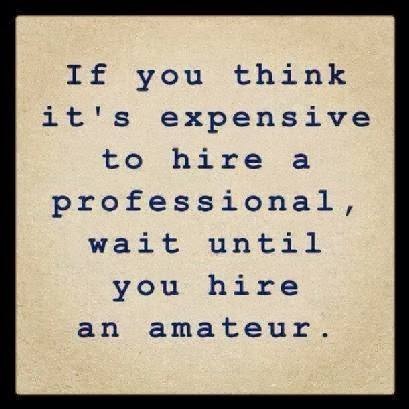
Wait until you hire an amateur…..makes you realise the value of having a professional on board.

Business Advisors of the future must;

  • Be experienced leaders who lead by example with their own Business practices and actively see themselves as leaders and influencers. Advisors who make things happen, can influence people through real stories of practical application and who can coach, mentor and guide other clever people. They must have people skills (EQ) and empathy.
  • Own the voice of their customer. They must have an up to date (& data based) understanding of what their customers really want and need. In fact the top advisers are pro-active and bring solutions to their customers before they know they need them. They anticipate needs rather than react to immediate situations.
  • Have humility and respect always.
  • Be future focussed and have a passion for lifelong learning. If you are as good as you will ever be it’s just not going to cut it. Academic qualifications are table stakes and the start point not the end game. They must provide clarity and inspire confidence for those they serve by constantly up skilling and learning.
  • Bring researched frameworks & networks of like minded people. The day of the individual guru with all the answers is gone. Business today is simply too complex to know everything. The best Advisors will connect customers to other leaders, professional advisors and collaboratively bring unique solutions to complex problems.
  • Measure and manage & clearly demonstrate massive value. This will not always be financially driven either, rather it will vary from customer to customer.

So thats why we do what we do. These are but some of the reasons we are on a mission to disrupt Business Advisory. Business leaders expect and need more and this is not opinion….. we ask them regularly and have done for many years.

Lessons Learnt From The Army: How to Fight to Win

IMG_1308
Leading NZ soldiers is an incredible challenge, responsibility and privilege.

Much of my working life has been spent as an Army Officer, initially as a regular and later in the Reserves. I have found that the skills I learned and applied leading soldiers are very relevant and transferable for leading teams and driving business execution; especially in this increasingly dynamic and ever changing marketplace.

As you can imagine, the challenge of leading men and women who are working in dangerous roles in challenging environments requires a high level of trust, empathy and teamwork.

The Army places great emphasis on leadership skills and invests heavily in leadership training and development at all levels. Training courses to enhance leadership skills continue right through to those at the very highest ranks of the Army.

Here are six key things that the Army teaches their leaders in order to “fight to win”:

1. Remain calm under fire.

That’s not to say that fear is not present, in fact it is. However, to “keep calm and carry on” regardless of the situation is something you can learn. It is the golden rule for keeping your head and working through a logical process in order to respond to a hostile or changing situation. Being calm and thinking clearly are essential requirements to evaluate what is happening and to make effective decisions.

2. Any plan is better than no plan.

Without a plan you cannot inspire others to follow you. Having a plan is the starting point for successful execution. Even if the plan is not the right one, making a decision and creating a plan will save lives and generate positive activity. A good team will back itself to quickly adjust a plan so that it is effective.

3. No plan survives the start line.

The Army recognizes that in every situation there is another party that can influence the situation. Not just the enemy, but terrain, equipment, weather, civilian populations, and even animals can influence a plan. All the various scenarios that might happen should be considered and planned for so that the plan can be quickly adjusted if required. The fact a team has planned and engaged together allows it to quickly iterate the plan as needed.

4. Maintain momentum.

In any situation there needs to be swift action, and momentum needs to be maintained to ensure successful execution. Slowing or stopping any operation means it is difficult to get going again. It reminds me of the saying “When going through hell….keep going!”

5. Teamwork is a defining factor.

A group working together and supporting each other to achieve the defined goal will greatly lift the chance of success. Training together, working together, getting to know one another, and building trust all help to build teamwork. Good teams keep going when the going gets tough, and they overcome blockages in order to win.

6. Time is seldom wasted in planning or recon.

Taking the time as a leadership team to plan ahead for future operations, alternative scenarios, routes to be taken, areas of interest, and likely courses of action is seldom wasted. Planning and reconnaissance actually saves time, saves resources, and in many cases, people’s lives.

There are many situations in business where these skills can be applied. Strategic thinking, strategic planning, working together to build teamwork and trust, as well as incorporating a planning cadence that allows a business to quickly alter a plan and then change direction as required – are things a smart business leader does.

Influencing and inspiring people gets stuff done. That’s called “business execution” and by applying these six lessons from the Army you too can inspire your team to “fight to win.”

The Pivot: Staying at the Top of Your Game

How do the top performing teams in the world stay at the top of their game? Sports teams, racing teams, leading brands, innovative teams, military teams and many others? What do leaders at the top of their game do to stay at the top? What does this mean for business?

unnamed
The best teams change before change is needed. They pivot and iterate to stay ahead of the crowd.

Right now things in business are going pretty well. There is uncertainty in the medium and longer term as to what is going to happen in money markets, commodity markets, the Chinese/US or EU economies. There is a lot of technology disruption starting to show up on the fringes of even the least tech savvy industries. Change is coming and whether it is disruption, a softening economy, a total global meltdown or even a major political event we will all need to navigate it.

The RESULTS Group work with good companies and proactive leaders who want to get better at what they do. Our clients tend to be the long term brands that over decades have performed exceptionally well. They are actively seeking to stay at the top of their game.

In the next 5-10 years all of us leading (me included) are going to face more change than the world has seen in the last century. It will be fast, ongoing and relentless and will be an exciting and challenging time to lead. Some commentators say we are in year 2 of a 35 year technology disruption. How true is this and how will it affect our own business is open to interpretation but we are all starting to see the wave of change.

To stay at the top in any professional environment there is a need to develop a culture of continuous learning. If we look at the All Blacks (the most successful global high performance professional sports team/brand with a winning record of 86%, two back to back world cups & recently voted the best team in the world across all codes). In James Kerr’s book “Legacy: What the All Blacks can teach us about the business of life” you will see Chapter 2 is entitled “Adapt”. In essence the commentary is all around “When you are at the top of your game, change your game.” This is about changing consciously before you need to, in order to stay ahead of the competition and to remain the best of the best. To keep an edge or a sustainable point of difference.

IMG_3527
A summary picture of the key chapters & topics of the book “Legacy” by James Kerr.

I like to refer to the term “pivoting”. I saw this in action during some work I recently did at the University of Florida, assessing entrepreneurial engineering teams and the projects they were completing for private business. They were presenting what they had achieved and were seeking feedback so they could iterate and improve their project. They were seeking a “pivot” through good insights and application of ideas.

The best leaders and companies we work with are already pivoting at a time when they are performing well. They know through experience that the good times won’t last. To stay ahead of their competition and to navigate change they must understand what success continues to look like. How do they do this?

Those CEO’s proactively keeping ahead of the crowd prioritise the following;

  • They invest in their own development and leadership skills so they can lead smart innovative people in a collaborative way.
  • They spend time in strategic and operational planning with their teams, senior leadership teams and functional teams. They continuously define the priorities and focus of action.
  • Actively build an aligned plan to execute continuous change and constantly reflect on it, revise it and iterate it to make it better. They empower their people to lead parts for the execution.
  • Focus on execution and getting the important things done.
  • Seek the best advice on technology disruption, the economy, competitors, new entrants and possible substitute products and services.
  • Stay very close to their clients and know what they value, expect and want improved. They build collaborative and close relationships through many channels including social media.
  • Invest in leadership development (and education) and focus on increasing staff engagement to build resilience and an ownership mentality. This aids the change process and brings innovative and collaborative thinking to the fore.
  • Focus on the numbers. What gets measured can be managed.
  • Actively disrupt the companies “business as usual” in a positive way so as to build capacity and capability in a continuous way. This allows the organisation and the team to scale up in a long term sustainable way.
  • Make the tough decisions early.
  • Learn the lessons of previous economic downturns and change projects so as to ensure the same mistakes are not made again, and
  • Recognise success and continue to have fun along the journey.

This all sounds simple (and it is) but it is not easy. It takes focus, good strong proactive leaders committed to ensuring the important things happen and not just the urgent things of modern business. It is about going beyond reactive firefighting and consciously picking & executing the plan for/route to success.

Staying at the top of your game is about changing before you are forced to change. This means having a good team committed to getting incrementally better at what they do.

It is about confidence and momentum.

Just start the journey.


My Memories of 20 Feb 11: Ground zero post the Christchurch Earthquake

20 February 2011 (5 years ago) at just after 1pm was one that shook is all, a major earthquake. Our office building evacuated & we headed for home. That in itself was going to be challenge with a full central city evacuation under way & bridges out. Short Texts came through to tell me my immediate family were alive & safe. My brothers house was hit by rocks I knew & Dad was in it…..but just how bad things were was to later be a bit of a shock.

I had left the Army in 2004 but was in the throes of rejoining the Army Reserve.

183120_10150109284772297_3400567_n
Central CHCH 1.46pm 20 Feb 11

A call from the XO of the Battalion (the only one to come through in a jammed cell network) redirected me to Army duty. I parked my car and proceeded from Sydenham to the city centre. In my office attire I walked through liquefaction and what was a scene out of a movie. It was 1.30pm.

I walked past a building lying across a lane of Montreal st, stopped to hug a distraught older woman with half a hair dye and foils in. Distraught from watching a bus get crushed she was walking to Oxford 50km away crying.

I overheard builders discussing how they should secure their high rise site and get home.

My task from the Army was to find the Mayor, provide the NZ Defence emergency cell numbers and to proceed to the Civil Defence bunker on Kilmore st. Later I was to discover my wife’s bravery in getting Caetana from school amongst collapsing cliffs and then helping Dad who was trapped in my brothers house that was destroyed by rocks.

The mayors staff had been evacuated after an aftershock from the new gallery building. I passed on the info to Bob Parker & his Ops Manager, gathered a couple of soldiers who were there looking to help and pushed on to find the civil defence bunker, my next task was to fill in as a situation/operations officer until a regular Infantry officer could get in from Burnham. Little did I know it would take many hours for him to arrive.

My first job back in Army service for 7 years.

The bunker was hard to find in the chaos, I passed through the emergency aid station in Cramner square and through many police check points.

In the bunker I found my old Army boss, Baden Ewart in command. Baden was working in the medical world and was stepping up given that the civil defence staff were in Wellington the day of the quake.

I sat in on the briefing of the current situation and it was apparent that a lot of people were hurt and killed. Early sky TV reports showed the CTV and PGG building collapses and I could hear the fire and police radio traffic spelling out the terrible challenges they faced.

Andrew Howe was the ops officer (an ex army friend and colleague). I was put in an office with the fire liaison officer. All the Army assets were in Timaru in preparation for a large defence exercise and by chance HMNZS Canterbury had docked at Lyttelton minutes prior to the big quake. It was full of armoured and military vehicles and soldiers that would help.

179868_10150109274772297_7016067_n
The Civil Defence Bunker, 20 Feb 11. Andrew Howe and others discuss the situation, approx 4pm

My role was to link between the civil defence command post and the Army command post in Burnham and to support military flights bringing high risk search teams, generators, water treatment units and medical assets into the city. We were coordinating fuel and power for the fire and police services to keep operating and prioritising transport heavy lift and military communications assets.

40 mins into it someone came into the command post and announced that it looked like the Copthorne Hotel might collapse on the bunker. With ongoing large aftershocks hammering the city it was possible although a bit dramatic I thought. Baden said “Langston go out and check that”. So out I went and looked at a 12 story building leaning over and definitely looking like a potential collapse.

My report ” I’m no engineer Baden but it’s not looking flash”. Someone did mention that the bunker was designed to withstand a building collapsing on it but then who would dig us out. WTF?

And so through the shock and chaos a lot of good people worked to make sense of it and to make a difference.

At a little after 7pm I was relieved by an Infantry Captain (he had to park in Riccarton and find the bunker) and walked the 7km around the cordon to my car in Sydenham. A full cordon was in place and with no ID the police made me go the long way through the park and around the 4 avenues. Our office was in the cordon (for 6 weeks) and I arrived at my car covered in mud.

My trip home to Sumner paused at my brothers place where I surveyed the damage, the rocks on his house, the tunnel my dad escaped the 2nd floor from and the boat that had caught fire. Ed was smiling but shaken. My family had tents on the lawn and Dad was quite badly shocked after his experience. We settled into a night of aftershocks, sleeping on the lounger floor and the start of months without water, sewerage or power.

199725_10150155694357297_1789585_n
My brothers house suffering rock damage. My father was lucky to escape unhurt.

I will always remember that day, just how surreal it all was and the part we all played in a difficult situation and uncertain environment.

It was a fitting baptism back into our Army and Months later I received an unexpected letter of commendation from the Brigade commander thanking me for my work that day. Many people did what needed to be done and I was proud to play a small part for the NZ Army.

I never did get around to claiming that first day of army pay (it didn’t seem right) but it was worth it for the adventure & I’ll chalk it up as a donation!

……. And so we remember.

Some of my pictures of that day are attached. We were one of the lucky families that all survived although we were all affected by those who did not.

Feedback from Over 200 CEO’s: What they Learnt in 2015 and the Challenges They Face in 2016


IMG_2319
Business change is constant and increasing at an alarming rate. We will face more change in the next 5-10 years than we have seen in the last 100.

In December 2015 I went out to a wide network of CEO’s and asked the same two questions I have asked in 2013 (Link to the 2013 results here) & 2014 (Link to the 2014 results here). The questions asked were;

  1. What were the biggest Leadership Lessons you learnt in 2015 (and/or leadership observations you have made)?
  2. What are the biggest challenges you feel you will face in 2016?

This survey also took in to account the responses from 104 New Zealand CEO’s conducted for The RESULTS Group by an independent research company (Per.ceptive Research).

It is fair to say that surveying over 200 CEO’s (in many varied industries) across New Zealand (mainly), Australia and the USA meant I received a huge amount of feedback. It was a challenge to consolidate this feedback, despite there being some clear common themes. Here are the results.

Question 1: What were the 3 biggest Leadership Lessons you learnt in 2015 (and/or leadership observations you have made)?

  1. “The importance of company culture and just how difficult it has been to lead both change and people (to change).” Change has been constant especially with technology disruption in many industries. Understanding what needs to change and then to actually get people try different things or new ways, new systems & processes has been really challenging.  The quality of people in the team, their skills and the ability to actually get things done has often been the main point of differentiation over competitors.
  2. “Establishing the Accountability within your people to get things done/to take action.” There has been more focus & need to have clear KPI’s and measurements in place so as to lift engagement and accountability within Companies. Taking action, executing and making things happen is increasingly important in an environment of constant change. To try new things, fail fast, adapt or simply just to do what has been agreed to is critical. The challenge of holding people to account, measuring and managing has increasingly been seen as vital in business in 2015.
  3. “Being able to change fast enough whilst keeping it simple.” It has been increasingly harder to keep things simple and to identify & focus on doing the important things. Saying “no” to opportunities, constantly trying to keep things from becoming extremely complex has been a real challenge in a world that tends to expect you to do more and more. “Busyness” is the new plaque and separating the important from the urgent has become ever harder to achieve.

Question 2: What are the three biggest Leadership Challenges you think you face will in 2016?

  1. “Remaining profitable through Growth.” We all know growth sucks cash and typically businesses are under capitalised. Often the main measure of Business success is profitability and it is widely felt it will be increasingly harder to deliver profits as change increases, profitability shrinks and as businesses grow.
  2. “Developing future leaders and motivating good people.” Succession is increasingly looming on many company radars. Developing future leaders to take the business forward, to be able to sell the business, to step up as current leaders step back are all challenges many see in 2016. Motivating and engaging good people to stay longer term & to set the business up for future success are skills CEO’s are seeking and actively looking to invest in.
  3. “The increasing pace of Change in the Market place & the ability to adapt.” It is perceived that there will be more change in 2016 & it is increasing. The ability to adapt to change, embrace new technology tools and compete is seen as becoming more of a challenge for CEO’s to remain profitable and to grow. Developing new products &/or services quickly enough to meet the market and client expectations are key challenges identified.

Every year in business is a different one that brings a mix of the ongoing leadership challenges along with many new ones. Certainly change is now a constant and that pace of change is really starting to pick up. The impact of new technologies in communication, automation, artificial intelligence, online applications and tools & social media are changing things fast. In fact much commentary is suggesting we will face more business change in the next 5-10 years than we have in the last 100.

One thing that does not, and will not change is fact that every Company (and indeed group of people) needs a leader. In fact research shows we all want to be led in some way, shape or form. The importance of a leader and his/her ability to inspire, coach, mentor & influence good people to get important things done in an environment (culture) they enjoy is often the main (sometimes the only) point of differentiation a company can have over competitors in increasingly crowded markets.

Strong leadership & excellent change leadership skills are increasingly the most important skills that will define a businesses chances of long term success. During 2015 our Executive Leadership Program has become the fastest growing part of our Business as we seek to support CEO’s to lead change, achieve sustainable growth and to support them to prepare for sale, economic downturn or industry disruption. More than ever high performance business leaders need & seek good practical smart advice, support, facilitated planning, time out and an unwavering positive outlook to navigate the challenges 2016 will bring.

What are you planning to intentionally do differently to lead Business Success in 2016?

  • You can link here to the CEO blog summary doc which shows the comparable results of all 3 surveys.


Leaders Must Take Time Out

Leaders Must Take Time Out

Like you I am working some pretty long hours to finish all the things that need to be done prior to Christmas. Christmas is after all the ultimate “deadline” and as a leadership tool the “power of a deadline” is a well know tool for execution. People respond well to it. Come Friday this week I am taking 4 weeks off. It sounds pretty cushy I know but the reality is it actually takes planning, hard work and of course a lot of discipline to actually turn the technology off, disconnect e-mail and truly wind down. I wrote about the importance of leaders taking time out (Link here) some time ago when I was with RESULTS.com.

CEO’s, business owners and leaders are the worst at taking their time off and yet they owe it to those they lead to be at the top of their game. They must make good consistent decisions and lead effectively through all the change and pace of modern business. Any company feeds a lot of families and the responsibility of that alone means they should be led well.

So take some time out, truly disconnect, leave the phone at home, turn the e-mail off and divorce the laptop for a few weeks. It is important for you to have time doing other things, pursuing interests, looking after your family and recharging.

Happy Christmas.

Feedback from 200 CEO’s: What They Learnt in 2013 & What They Face in 2014

I have been working on the Strategic plan for the Results Group. One of our core Values is “Live what we teach” so it is important to Imagehave a framework in place of quarterly & annual reviews. Any business needs to understand what their clients need and face. I recently wrote about the framework for “Making High Performance Leaders Better” (link here) and something I have spent a lot of time facilitating this year which is “Owning the Voice of the Customer” (Link here). Any company who regularly invests in owning the Voice of their customer not only develops products & services that are of high value but they maintain a Strategic advantage over competitors. This means speaking directly with them often and really hearing what it is you do well, what can improve. It takes an approach of seeking excellence by incrementally getting better & better at core business.

The Results Group helps CEO’s (Business Leaders) to “Lead Change with Certainty”. As part of my research I undertook to ask as many CEO’s to help me as I could. I went out to as many networks as I could. I asked questions on Linkedin, on my blogsite, in person, via e-mail and through both my team and other professionals who work with CEO’s. The result was feedback from just over 200 CEO’s. Many in Canterbury, most from within New Zealand and a decent number from Australia, the USA, Canada and beyond. Many are clients but not all. They are leaders I work with in primarily the world of private business but also there is feedback from the Public sector and larger Corporates. They all lead organisations and people and are CEO/Business Owners. Here are the results which took considerable effort to pull together into key themes. There were many answers as you can imagine so I spent time understanding the key themes/patterns that were common. I asked for the top 3 but feel there are 6 key areas that came through so I have included all 6;

The first question I asked was “As a leader what did you learn in 2013?”

– The importance of Leading by Example: In all you do be genuine, set standards you want others to follow. Be fallible and show that you make mistakes and learn from them, be tough with your staff but ensure they understand what you expect and then that they deliver it. The single most important thing to come through was the importance of being consistent as a leader & in how you deal with people & decisions.

– Empower your People to succeed : Invest heavily in developing, mentoring and training them. Ensure they have not only a clear role that defines what success looks like, but the autonomy to to do the job. Delegate to your staff. Keep them on track often and regularly. Celebrate the wins when they happen (big & small this was a key comment).

– Create a clear Vision & Values Structure: This is especially  important for consistent decision making. It was also critical for the times when the way forward was not “obvious”. It gave a framework for making the important decisions. Speak about “Vision” all the time, make sure the team understand it and align with it and make sure the Values are alive in stories and awards.

– Communicate Clearly & Often: This came up in almost every reply. Be clear in your communications as a leader, set expectations, communicate them often, give good timely and direct feedback so people understand where they stand. Many said they had learnt the importance of communicating the same thing many times to ensure people “get it”. This applied in both large organisations and small ones.

– Have Good Mentors: Mentors internal and external to the business. Have good networks of professional people who want to see the business and those in it succeed. They keep you “real” and things on “track”. Most importantly it keeps you honest as a CEO. The need to ask for and take good advice was a central pattern of comments.

– Include Your Team: This related to including people in both building the plan and in how it will be executed. The need to trust people with information was a key learning as was the need to engage people in the plan. Seeking  feedback on progress, opinions, ideas and on how things could improve was also a central theme.

The Second question I asked was “What are the Challenges you will face as a leader in 2014?”

– Building a Strong Culture: This was a very common theme. The need & desire to build a culture that attracts and retains top talent. In Christchurch this is definitely the number one challenge given that it is a tight labour market. Building a culture that is balanced between high performance and fun, a culture of achieving results. A culture that is a major point of difference over competitors were key challenges for 2014.

– Building Brand: This related to having a clear and strong brand in their particular markets & industry. One that stands for something and is well known. Getting clear on what their brand is and should stand for and being consistent in branding and marketing activities were key actions that needed to be addressed in 2014.

– Recruitment: Of key people. This tied into “Culture” but mainly related to the need and desire to have a good process in place. Challenges included the need to recruit top talent, the time and effort taken to actually run a good process that delivers a skilled recruit that fits the culture & who should be involved. Something mentioned by many CEO’s was the challenge of “understanding young people” and how how to lead them. Sound familiar?

– Leading Change: Change was on the radar for all those responding. The challenge of helping their team to change and to lead the change. A lot of technology change is on the agenda for 2014 i.e. implementation of new systems, software and technology. Changing the business structure also featured abundantly. The need to stay competitive, achieve high levels of staff productivity, introduce and develop new products & services. A key concern was how they were going to do this “when light on details” (plan) or where there was uncertainty on the process needed. Some talked about the “courage” needed by all leaders in the Company to implement change.

– Free up Time: A central theme was the need to delegate to staff more in order to free up time to lead and work on the business. Most were seriously time poor and needed to alter priorities in 2014.

– Learning not to Sweat the Small Stuff: There were many comments about learning to be comfortable leading when there can be no “perfection” and being comfortable with that. There was a recommitment to “bringing back the fun” and a desire to “not take it all so seriously”.

Overall this was a very interesting exercise. It not only engaged a lot of CEO’s to reflect on what they have learnt and on the year ahead but it was the first time I have done this on a large scale. I found leaders genuinely keen to help, to offer their thoughts, who wanted to engage in wider conversations and I learnt a lot. I saw themes & patterns common to all leaders (regardless of the size of the team or organisation they were leading) and themes & patterns relating to Canterbury (with the current post earthquake rebuild) and wider across industries.

The answers above largely tie in with what I have observed over a busy and challenging year closely supporting leaders in change. The desire to build strong cultures that attract and retain top talent being one I certainly have as the number one challenge on the radar for 2014.

What are your thoughts or comments? More importantly have you taken time to reflect on what you have learnt in 2013 as a leader and to define what it is you think you will face in 2014? How will you address the challenges? In my mind leading organisations and leading through others is and remains one of life’s biggest and most rewarding challenges you can face.